The Imagined World of Gabriel Isak Seeped in Mystery and Depression
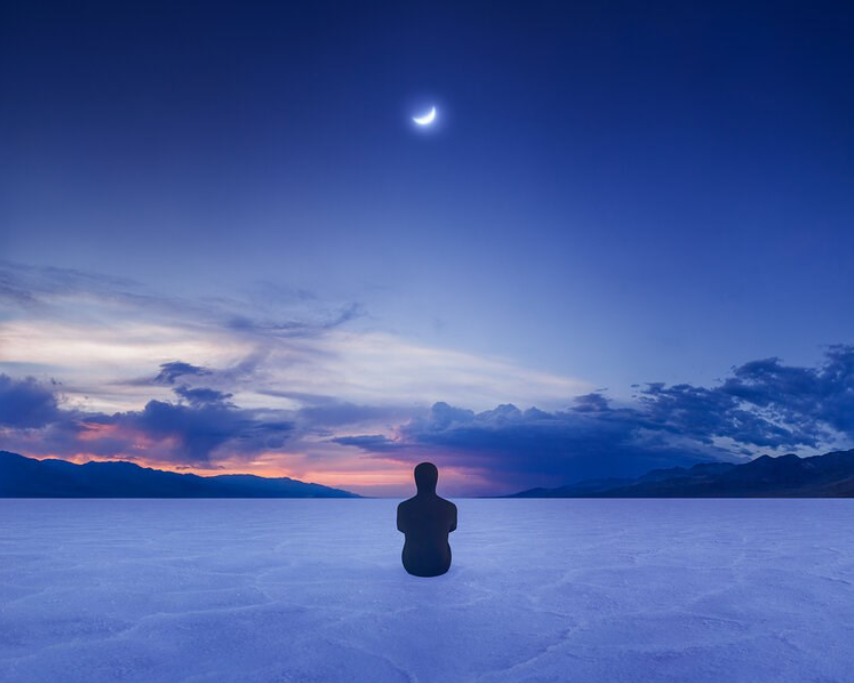
Under The Moon, Gabriel Isak. 2020
Gabriel Isak’s art entails surreal and melancholic scenes where he invites the viewer to interact with the inner world of solitary figures that symbolise our own unconscious states. He uses photography to draw and paint surreal images, minimal and graphic in its aesthetic, rich in symbolism and emotion, focusing on themes inspired by human psychology, dreams and romanticism, as well as his own experiences, especially the years he went through depression. Isak’s work is a serene and melancholic meditation that stills the chaos of life and transforms into an introspective journey that questions the depths of existence. The objective of Gabriel Isak’s art is to shine a light on the experiences of being and the states of mind those brings along. His subjects are anonymous, imprisoned in monochromatic settings, so the viewer can envision oneself as the subject, reflecting back on one’s own experiences and journey in life. Isak’s compositions are simple but has emotions embedded in them. He uses minimalist themes and fuses them with dark symbolism, highlighting the internal and external struggles of individuals. His works have surrealism and a tone of melancholy buried in them, and the same is evoked among the viewers.
Interview courtesy of Yatzer (2018)
Where did your “psychoanalytical” approach to photography originate from?
At the time I started photography I was going through a depression that had just started to creep up on me, and the camera became a tool to express myself. Soon the depression took over and I could no longer take photos till many years later when I was at University pursuing a career in photography. Those intermediate years became at the time the source of my inspiration and I unconsciously started to create images about depression and psychology.
Although you often use people in your work, we seldom see their faces. Is that an invitation to viewers to project their own personas onto your subjects or is it a reflection of the hazy reality of dreams?
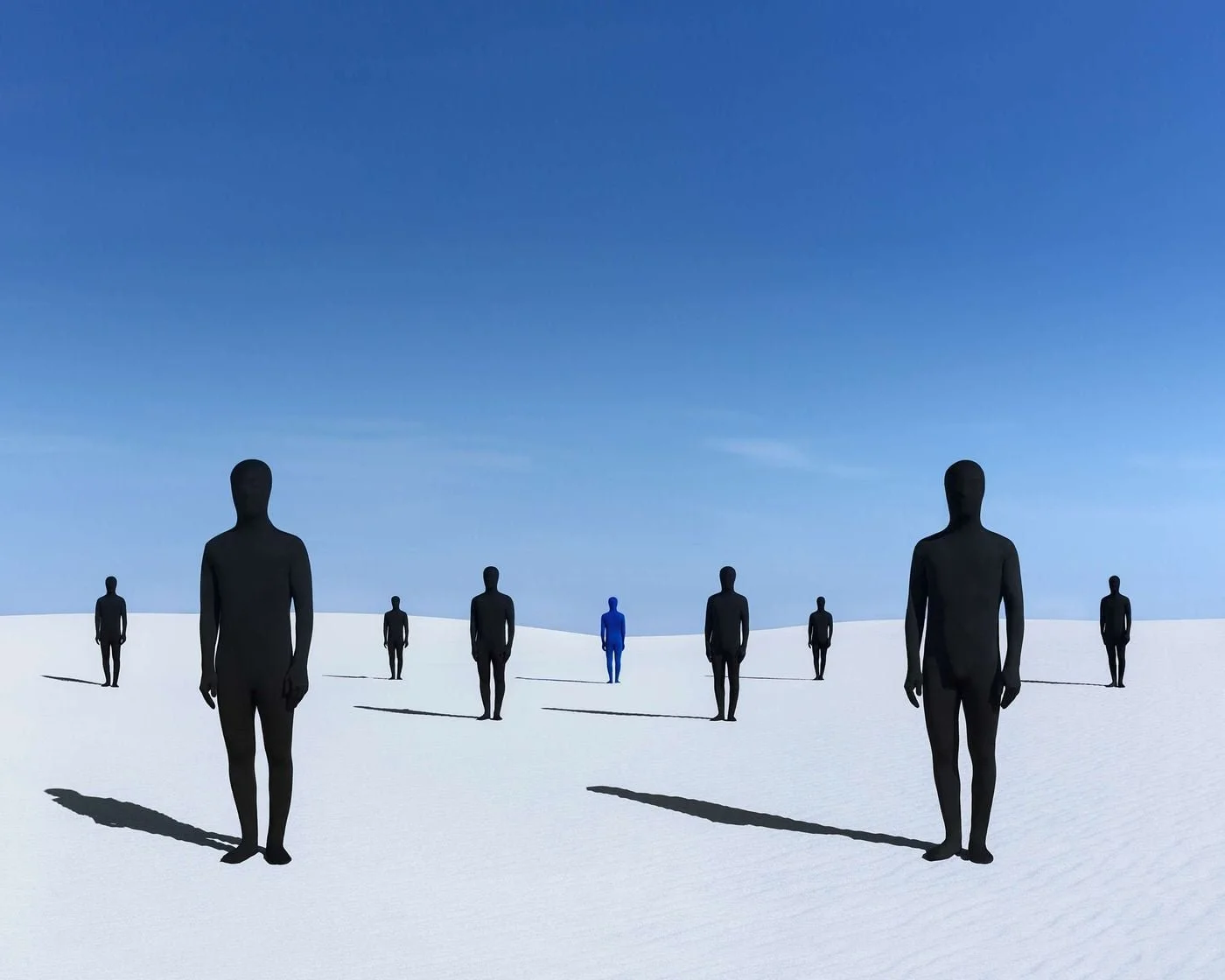
When portraying people I often cover them symbolically to ensure their anonymity so the spectator can peek into their own world as they interact with the subject, and in turn reflect on their own journey in life.
What are your criteria for choosing the settings for your photographs? Do aesthetics play as significant role as conceptual considerations?
Definitely. I always try to accompany each idea I have with a fitting setting that will help tell its story. Graphics play a big role in choosing my aesthetic. I often visualize a concept in terms of graphic design, choosing shapes, colours and lines to be a backdrop for the idea, with the subject completing the composition of the final image.
Tell us about your creative process. Do you plan everything in advance or do you experiment on set? How long do the photo shoots usually take?
I mostly begin with doing research or brainstorm. Then props are decided on as well as location, mood, colours, model, outfits etc. Every photo shoot is 90% planned in advance but there is always an allowance for extra time in case something doesn’t go as planned on set, especially when working outside. If everything goes smoothly one image can be done in 5 minutes, but lately I have been shooting a combination of different images/ideas on the same day, which means an additional couple of hours of experimentation on set.
How much post-production is there in your work? Do you believe that digital tools are a blessing to art photography?
Post-production has definitely helped my work to achieve the otherworldly atmosphere I try to bring to it. I always shoot everything I use in an image on the same location, and try to get as much as I can on camera. My post production process consists of adjusting the light, the colours and sometimes the composition, like replacing the sky or adding a levitating object, all of which were shot on the same location.
Blue seems to be a highly charged, symbolic colour in your work. What are you trying to convey or represent?
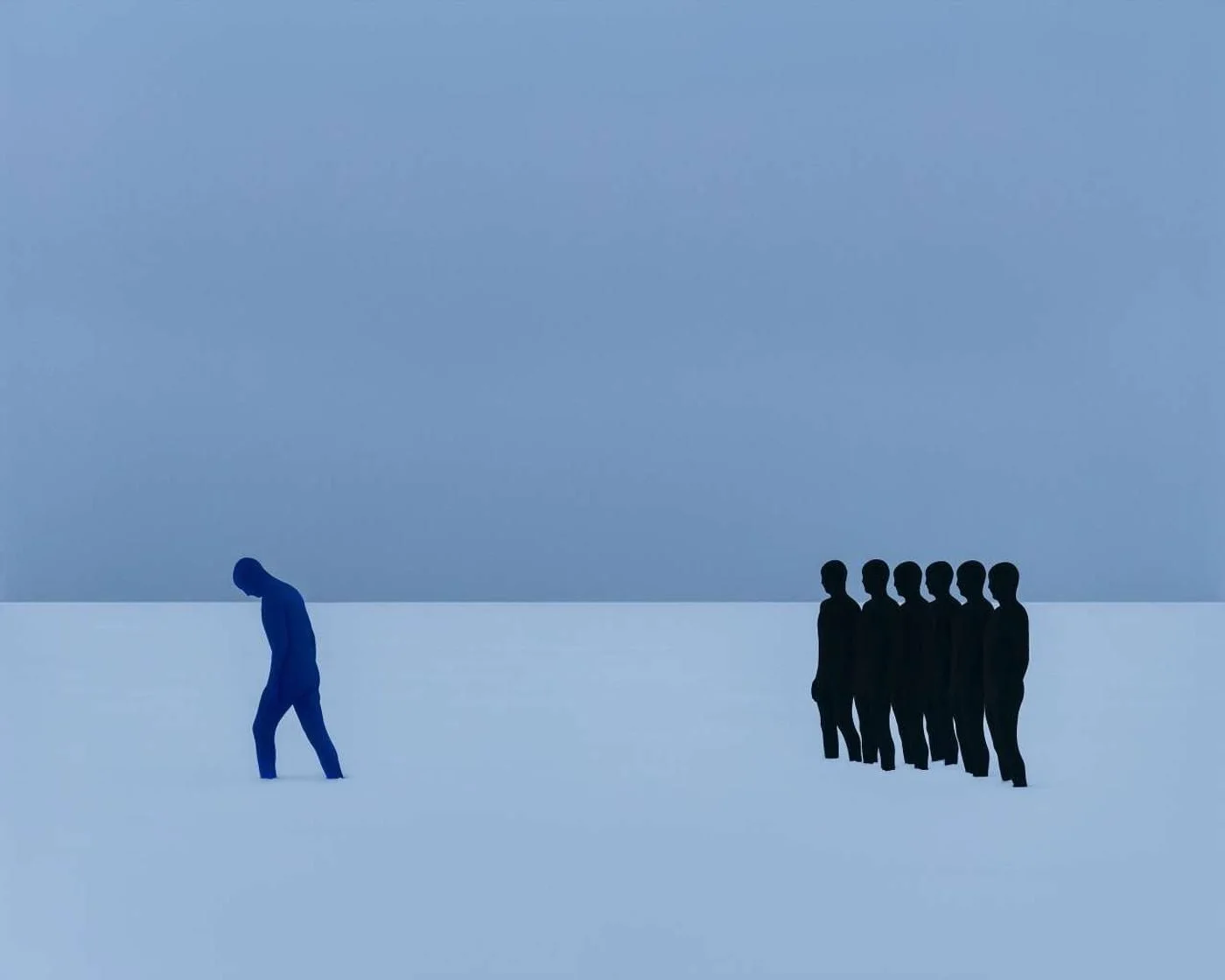
I use blue to depict a different dimension, often relating it back to themes of melancholia, existentialism and origins. I also use blue colours to create a tranquil atmosphere in my work.
Understanding Isak’s photography isn’t difficult. His isolated figures in barren landscapes are immediate clues that his work is targeted at melancholy, as well as the use of the colour blue which has connotations with depression and low mood. His heavy use of post-production is understandable when creating his imagined world as he works alone and so can’t produce flawless results in-camera the whole time as he has to composite the shots of himself in the morph suit. His interest in graphics is also intriguing as he is already thinking beyond the realms of what’s possible in-camera and is planning his final images ahead of time. This is reminiscent of Richard Long’s approach to outputs and, even though Isak produces purely photographic responses, the two seem to operate on similar wavelengths when in the process of creating their content.
