Martin Amis Uses Melancholy As A Warning In Two Projects
1. This Land
Article courtesy of ASX, Posted on October 14, 2021 by Brad Feuerhelm
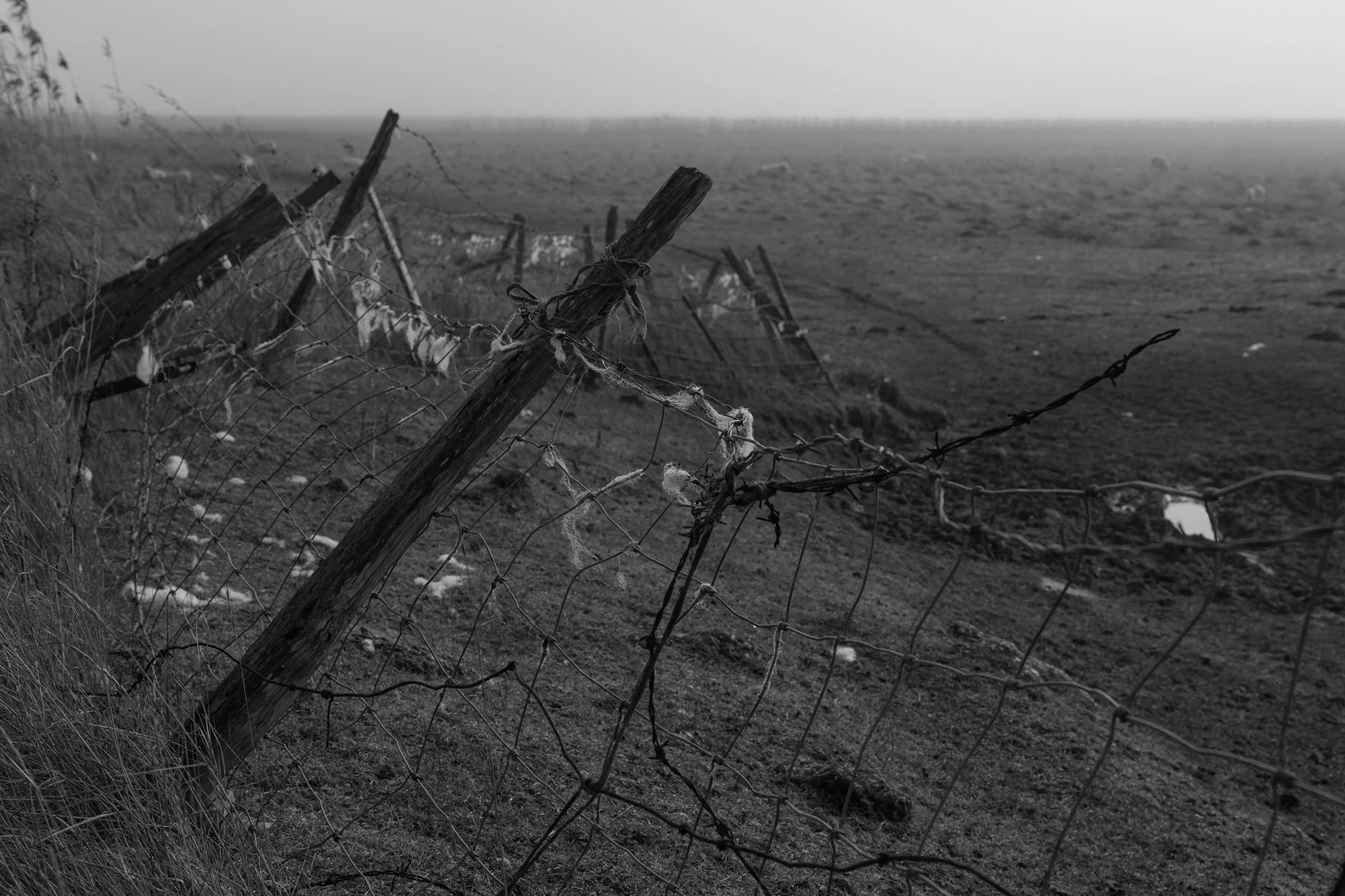
This land that surrounds us, this land that gives impregnable meaning to our terminal character and its capacity to acknowledge our decline never fails to remind us of our place on this spinning orb, nor the very short shuttle from birth to our inevitable ends. This land is a marker. Underneath the soil, below the twisted iron of knotted steel barbed wire running adjacent to the rotten wood of gnarled fencepost, this land slumbers, retrieves ephemeral grace through its imprinting of our children’s footprints, the shuffle of “managed” soil, controlled burns, and our inability to construct an enclosure large enough to truly keep it managed. This land reminds us of our elemental being, our own compostable elegy.
When we think of this land, by birthright or other nomadic means, we are reminded of our traipsing, our travels, our genesis, and our need for home, however temporary. This land is glacial. This land defines us. It places us on the long contiguous cartography of being human. It moves ever so slightly to overgrow the previous year’s warrens and dens, to combat the desire paths we form as necessary shortcuts over 1000s of years, these paths befit of the constraints of time between points of fixity allying A and B. This land slumbers and turns slowly, gravity is its only force majeure. This land is how we define our position. It is the rotating compass beneath our feet.
This land is a reminder of our melancholic tendencies. It pulverizes our desire for immortal status, reminds us that all organic matter is aggregate and built, the sediment formed from all life-affirming pursuits, but is reduced, beneath our feet to decay nonetheless. This land reminds us of the stardust that we are and that we will become again, an immemorable memento more that gives and retracts in equal value. It sustains us from the sweat of labor, its fruits are nourished as a product of our passing. This land is a reminder of our place in the larger order of time.
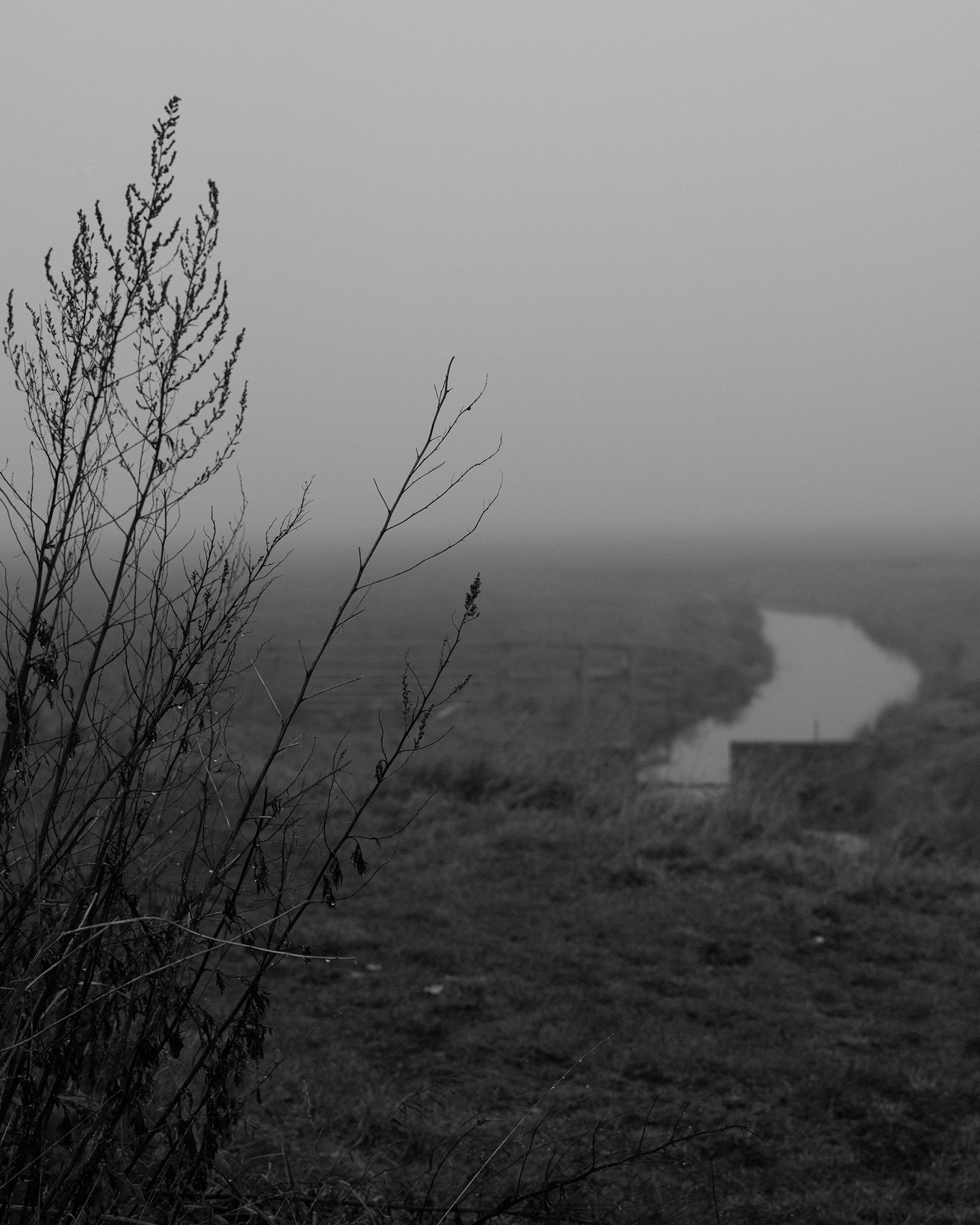
Martin Amis‘ new book This Land, published by Photo Editions Ltd 2021 is a melancholic rumination about the constraint of place and about recognizing what is truly elemental, the german word Heimat here being applicable. Crafted ostensibly in the years of the plague 2020-2021 A.D., This Land suggests a weighted pathos regarding the landscape of the familiar. In parts, I am reminded of Don McCullin’s images of the British countryside after his returning home from years of being a war correspondent. I am also reminded of Fay Godwin’s and Paul Hart’s studies of Britain. There are American references to consider as well from Raymond Meeks’ bucolic studies of his home in Ciprian Honey Cathedral and more aptly to Tim Carpenter and his last book Christmas Day, Bucks Pond Road. This is due in large part to the stopped-down greys printed beautifully throughout the book with a firm concentration on THE natural. The flattened plane of Amis’ photographs, unpunctuated by contrast soothes the eye, like the palette of Jenia Frydland, Craig Horsfield, and Roy DeCarava.
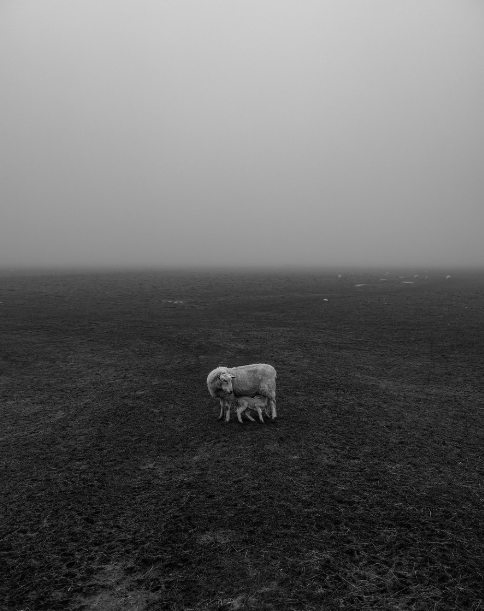
In Amis’ case, the grandeur and sublime order of the images, in their cloaked fogginess, their disappearance of the horizon, and their grey and dull tones imbue a sense of psychological questioning that asks us to value what is familiar and to conversely hold it slightly at a distance and to look upon it as something of a timeline, in which we fit as marks on the imagined graph for only a very short moment. Decay permeates the book. Cracked soil, fallow land, and ruinous structures dot the environment. Animals graze at a pace of unease. In Amis’ photographs, you get a sense of repetition through walking paths and through a concentration on the unexamined. An imagined test has been given to the artist to see potential under a set of procedural confinements. Amis defines his environment by consistency and by non-spectacle, outside of a penchant for liminal ruin gazing, all of which define his homeland, where he is at.
It is a hugely successful book reminiscent also of Matthew Genitempo’s Jasper in which the outland and banal sensibility of the rural is conflated with an oppressive weight of atmospheric character, mostly from the aforementioned printing technique coupled with a melancholic mode of looking at the margins, the hinterlands of the landscape experience. It is interesting to watch Amis’ progress. In This Land we see the photographer outlining his concerns towards something more atmospheric and competitively lyrical. It is at this crossroads that we find John Myers’ work before him, where the tradition of the documentary is but one of the shadows informing the entire work, and not the singular motivation for its crafting.
What I believe is at play here is an artist’s eye at the point of forming the beginnings of their signature, leaving behind the constraints of the documentary tradition’s intention to tell over that of implicitly asking one to feel. This newer concentration on monochrome melancholy suits Amis and the work offers, despite my reference points above, a voice that is beginning to form a clarity of individualized position and does so in a manner that is utterly convincing, compelling, and necessary for British photography.
2. Reverie
reverie (n): a state of deep and often dreamy contemplation or daydreaming, where one's thoughts and imagination wander freely and without a fixed purpose.
Reverie is a natural continuation of his previous work, This Land. It sees the photographer return to the Thames Estuary and it’s surrounding areas in North Kent, the tidal area where the River Thames meets the North Sea. Like dreams, this landscape, not quite land, not quite water, is an in-between space, neither here nor there. It is a landscape scored with stories of the past, as well as uncertainty around the future.
People are absent from the images, yet there are traces of human presence: the skeletal hulks of ships, electricity lines and fences, polluted waters, and industrial pipes billowing smoke on the horizon. Through these subtle details, Amis alludes to the ongoing destruction of these rural areas, many of which have been earmarked for new housing developments.
The passing of time is evident throughout. As the book segues through the seasons, we are carried into a dreamlike flow, witnessing both the quiet strength and beauty of nature, while also recognising what we risk losing in destroying these precious habitats.
