Militarisation of Dartmoor…. Militarisation of Dystopia
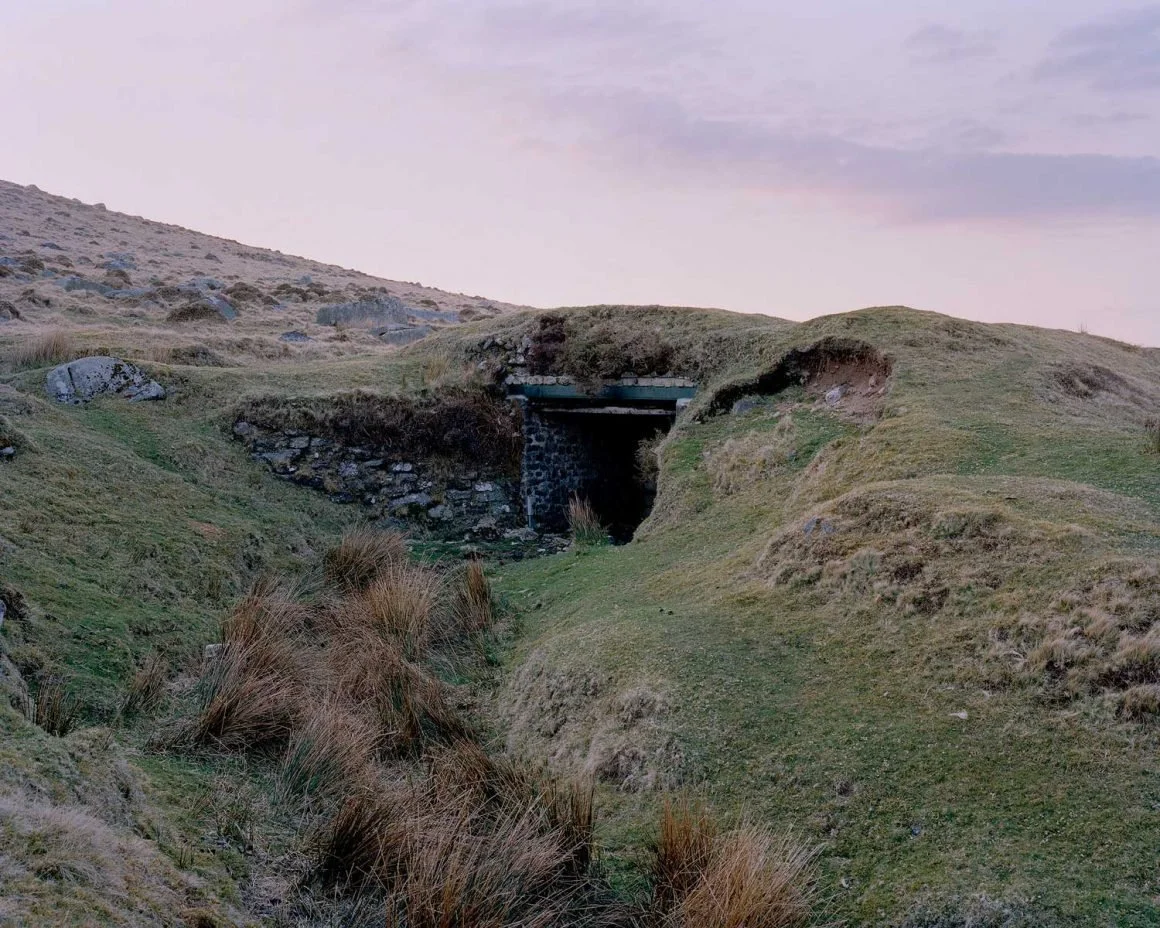
Courtesy of The Militarisation of Dartmoor (2012-13)
Having lived on Dartmoor for almost three decades, Nicholas J.R. White relocated his home and studio to the Inner Hebrides in 2023 but his roots on Dartmoor never left him. His work focuses on how we interact with the natural world through both landscape and portrait photography.
The Militarisation of Dartmoor investigates what White describes as ‘Dartmoor National Park’s long and complex relationship with the military, which has existed for thousands of years long before the area’s official designation as a National Park in 1951’. This photographic series identifies militarisation as part of Dartmoor’s cultural heritage whilst also acknowledging the damage caused by the local environment.
White began working on the project in early 2012 at the start of a renewed 21-year license from the Duchy of Cornwall, who lease the land to the Ministry of Defence. The shape and appearance of the Dartmoor Training Area continues to be manipulated to accommodate the needs of a contemporary fighting force. It is the perfect example of human tampering with our natural landscape, instigating a radical transformation for the betterment (or downfall) of mankind.
The juxtaposition of a National Park and a live military training area, dissected into three ‘danger zones’ (Okehampton, Merrivale and Willsworthy) is a contradiction and should conflict. Through research and photography, White is attempting to unlock the relatively unexplored strand of narrative being how a National Park and a military training area are capable of existing alongside each other. They compliment each other creating a tense standoff narrative of beautiful vistas dotted with historic infrastructure. This standoff is apparent in The Militarisation of Dartmoor but struggles to explain through the images how the area is also a National Park. Naturally this would be the case because the focus is on the documentation of strategic military points. Where I have the flexibility to explore the narrative further is my exploration beyond the ‘danger zones’ and the emotional context of the project - each image is related to basic human emotion of feeling and personal dystopia. A physical conflict can also be presented as an inner conflict whilst not prioritising either one as more important to the narrative.
