Notes From A Tutorial with Gabriel van Ingen
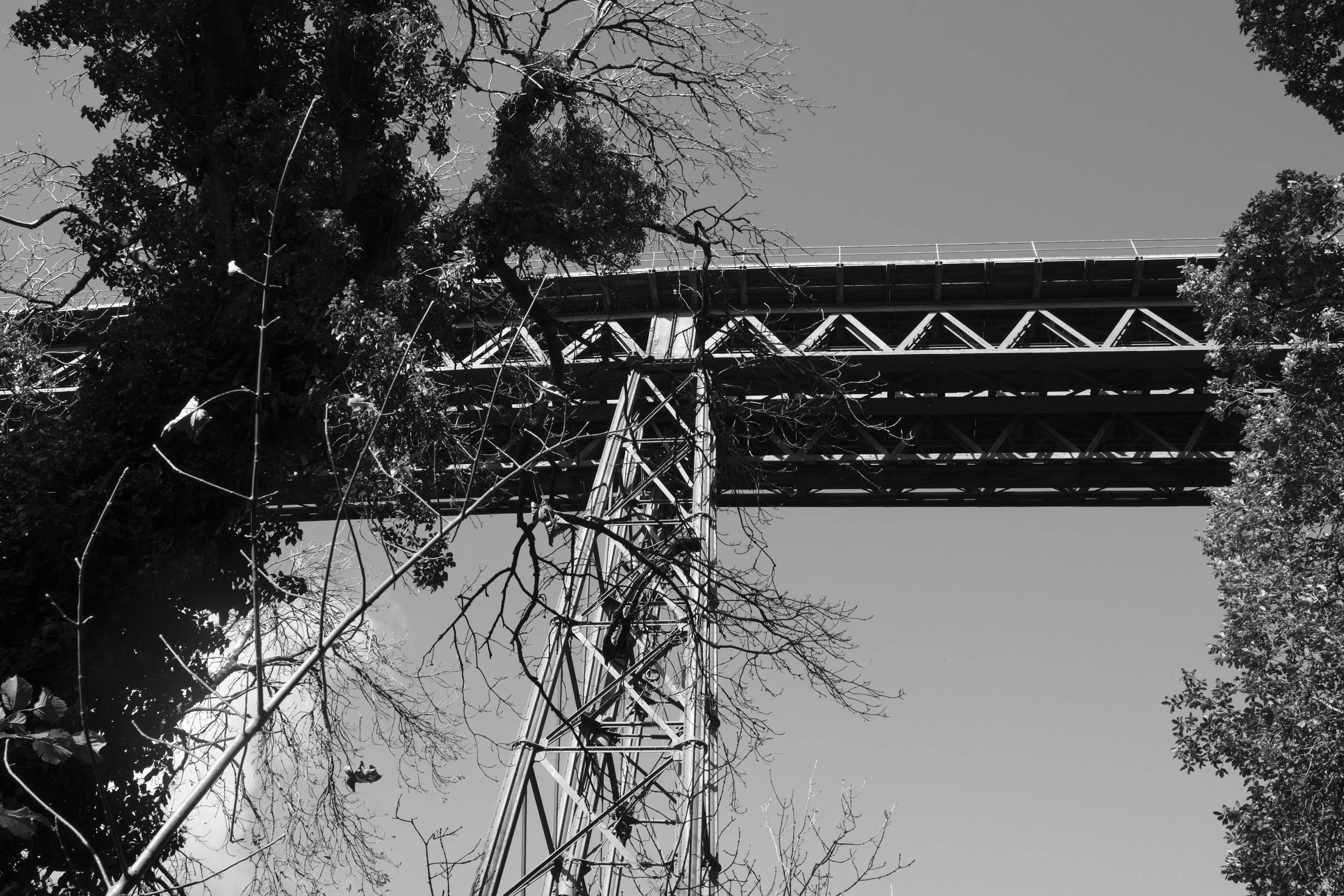
How you position your practice in a the broader context of photography is by looking at how the work ties together historically and contemporarily. Think about what’s been done before and add your own spin to it.
It’s about the Critical Positioning of the work, very much like Gabriel suggested here. How I position it in the context and discussion in the broader context of landscape and working in landscape is going to enable me to position it, as well as the dystopian idea and theories for narratives. My initial concern was the similarity between this and Robert Darch’s The Moor, however I’ve come to discover that these are very different concepts because his integrates people who present the melancholy of dystopia, whereas mine is purely through landscape and the photographer as an active presence in the world without being visible in shot.
What’s integral to the success of the project is how you process the relationship between landscape, environment, space and place. These are crucial elements that need to be approached with initial experimentation in this project and with cohesiveness by the Final Independent Project. Lots of people will start with questions such as when and where this was taken? What time of day was the shoot? It’s like those questions are the wrong questions to ask though. It’s not relevant whether this was shot at 6am or 2pm. Understanding the concept of how time is used and understood is something you can play with through sequencing to divert away from questions about the time itself and more about the time your world is set in.
I feel that experimenting on location rather than planning ahead is important for this aspect. Sure, research into other practitioners is helpful but this isn’t the type of project where I can experiment with directly emulating someone else’s work. Crucial awareness is shooting not for the project but for how I’m feeling. The connection becomes about how the landscape is used in relation to the self and the relationship to the images I’m structuring and making rather than the act of capturing with the camera.
There are photographers who work more as a surveying practice, there are landscape photographers that are more interested in environment, there are photographers who work in the landscape and use it as a backdrop to the narrative, and there are artists who walk and use photography as a means of documenting the walk. Whereabouts are you?
I’m sure that my work falls into the working in the landscape and using the backdrop as a narrative category. In saying this though, there’s absolutely no reason why I can’t cross some of the other disciplines over. I can bring walks into this as walking is a methodology in itself secondary to the main act of photography and I can find creative ways of commentating on the environmental impact we are having on the world. It could be described as an ethnographic practice of working in and responding to a landscape, not necessarily the landscape. It’s not about Dartmoor but it is about the place I am creating for the purpose of the project. There’s a distinct difference between a landscape photographer and someone working in a landscape. They’re working in the landscape and using the environment to inform a narrative. It’s about the concept of the dystopia rather than the dystopia itself.
If you are someone who works in the landscape then how are you using the landscape as a means to express a narrative about something?
It’s important that I don’t just hone in on landscape and bring in the architecture of Dartmoor as a form of presenting a dystopia because, more often than not, you come across ruins rather than new flawless structures. These can be re-tailored into commentaries on the breakdown of society and the destruction left behind in the world.
Pull in on the Non-Linear aspect of your work, in the sense that each image is a narrative in itself but forms a greater narrative.
Consider the meaning of individual images. For example, the shot of a gate at Devil’s Tor could be used as a tool to end the story, it could be a stopgap, or it could be the entry point to the narrative. The way that photography is used as semiotic symbols to read into is complicated yet intriguing.
This all comes down on how you are going to sequence the images. Are you putting them in a book or displaying them on a wall? Think about the potential for future presentation of the work.
For the first stage of the project, time restraints suggest the best possible outcome would be to show a sequence on the wall. The presentation aspect is key: if it’s on the wall, does it need text with it? In a book, are there points that break the sections up? Gabriel enjoyed the combination between “messy” images (tightly cropped, smaller details of an overarching landscape) and the “cleaner” images (seemingly more thought out landscapes).
If I get the ordering in a book right, I could build a really interesting narrative that really asks questions. Why have I put certain images where I have and what’s the relationship between each combination? You can only put one of each in though (eg: I can’t have two shots of the same chimney from Arch Tor).
