Dystopian Themes in Stranger Things
So after several years of friends recommending this to me I finally got the chance to sit down and watch Netflix’s Stranger Things. Only 2 seasons in, I’m far from disappointed. It’s a remarkable piece of media which is unique in the sense that the dystopian themes in the show act as a backdrop to the main drama without overshadowing it. Commentators have said that Stranger Things acts as a “dystopia for millennials and Gen Z” by using a nostalgic 1980s setting to explore contemporary fears about climate change, technology, and political ideologies. The show blends science fiction, horror, and coming of age drama to create a narrative where ordinary people must become heroes to save their world from evil.
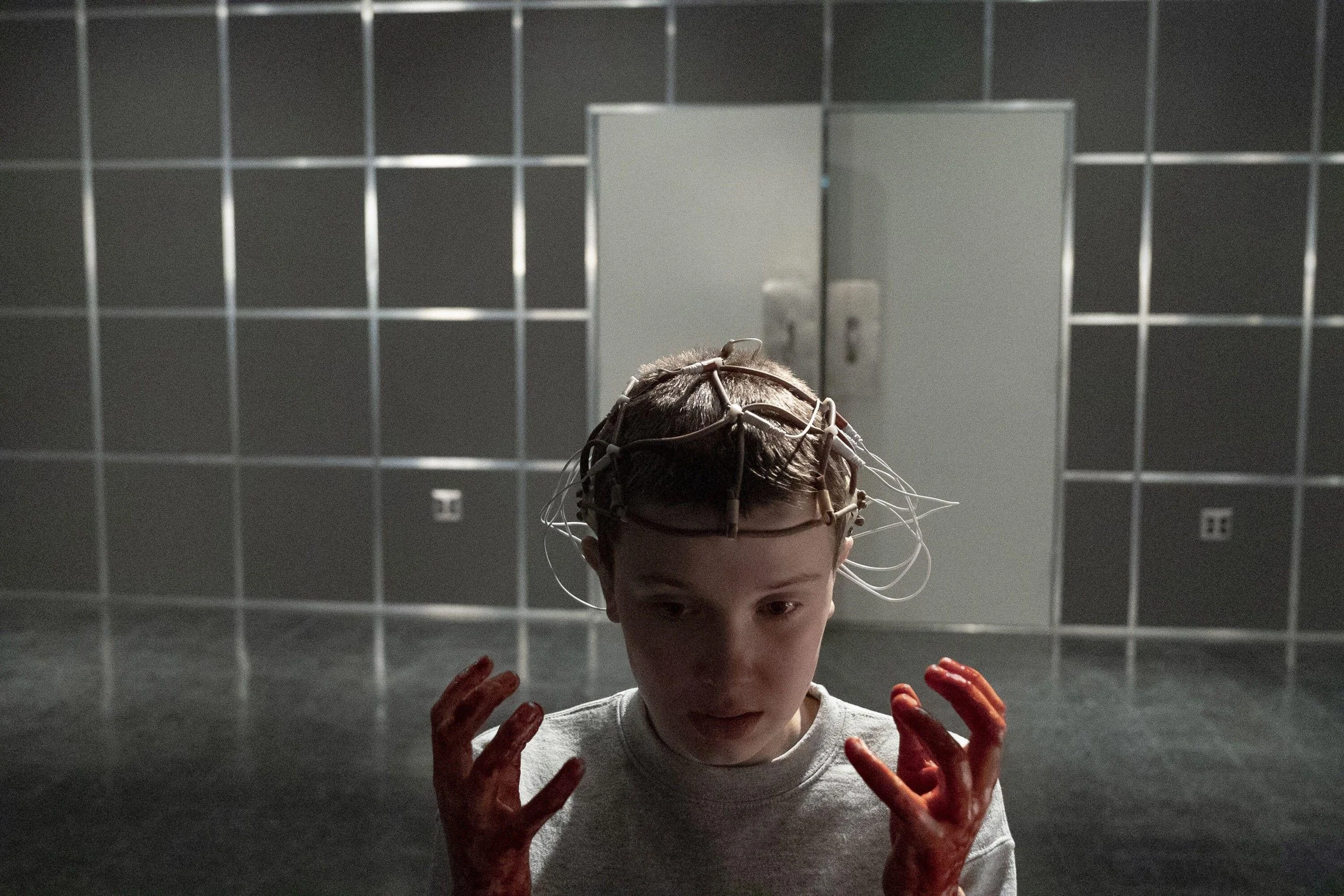
The central plot revolves around secret experiments conducted by the U.S Government at Hawkins National Laboratory, playing into the government conspiracies that spread like wild fire through the general public, presenting them as a reality rather than just a theory. It draws on ideas not to dissimilar to that of the Montauk Project, a theory that emerged from a book series by Preston B. Nichols which claimed to document research continuing from the 1943 Philadelphia Experiment. Secret projects supposedly involved psychic warfare, mind control on children, time travel, and even creating portals, using advanced equipment like a "thyron" frequency modulator. In the show, the laboratory is portrayed as a hidden entity that operates outside the public eye, experimenting on children and creating a sense of unease and loss of innocence in the community. This description is very much in line with themes of surveillance and destruction of the commuties that could band together to combat such leadership.
Very much like I’ve been doing with Dystopia, alternate dimensions/imagined worlds are a key plot point. The mere existence of the Upside Down presents a dark reality that constantly threatens to collide with the real world and consume the community in said darkness. This encroaching alternate world serves as a means to fracture the moral and social coherence of the town, forcing the characters to fight for survival in a world they thought they knew about but is actually not as safe or normal as it appeared to be.
Another dystopian idea explored in the show is the loss of bodily autonomy and control. Eleven is an example of an individual who has fallen victim to their experimentation as her body and mind was manipulated without her consent by the secretive organisation. The Upside Down also invade and possess human bodies such as Will Byers which can be seen as a metaphor for a loss of personal control and the violation of the human body. It reminds me of the Brain Machine Interface from A Brief History of the Future - people had a chip installed in their brains, very much like with Elon Musk’s proposed Neurolink, however the chip can be controlled against their will in the book by a ruling hierarchy. The Upside Down are established as the ruling hierarchy in the scenario of controlling bodies because they are who the community is oppressing.
There is also a clear rebellion against authority from several characters that feeds into resistance against dystopian ideology, most notably from the children and the female leads such as Joyce Byers and Nancy Wheeler. Some may argue that these are the ones who recognise and actively fight against the hidden evils, often without the help of the complicit or oblivious adult authorities. It’s a form of combatting powerful, corrupt systems but what’s also interesting is the success rate of the children trying to convince authoritarian figures that this is a very real concept. These figures are established as Jim Hopper and Steve Harrington in the original instance - they are characters that are easy to dislike to begin with due to their lack of knowledge about the Upside Down and their disregard for anyone who suggests it might be a thing, yet they become more integral to the plot and there-in more enjoyable characters as a result of their enlightenment on the situation by the children.
Finally, the most obvious dystopian hint in the background of the main drama is in fact as simple as the time period that the show is set in. The timestamp on a film recording says it’s set in 1984, the same year that George Orwell’s dystopian novel is set. This is no accident and is a subtle reminder that everything is not how it appears and there is negativity lurking in the background, depicted through the Upside Down and the character’s own personal hardship. The 1980s was also the height of the Cold War and this is mentioned in scenes at the laboratory where the justification for keeping things hidden from the community is regarding the Russians and what they might do if they learnt of the existence of the Upside Down. This is an incredibly dystopian way of thinking which doesn’t seem out of the realms of impossible if a scenario like this were to occur in real life - how would we react if our world was at threat from a threat we’d never seen the like of before? Would we extend a hand to the rest of the planet for help or would we act cautiously for fear our enemy would plot against us and use the discovery as an opportunity to wipe us out?
