Dystopia II | Wistman’s Wood Circular
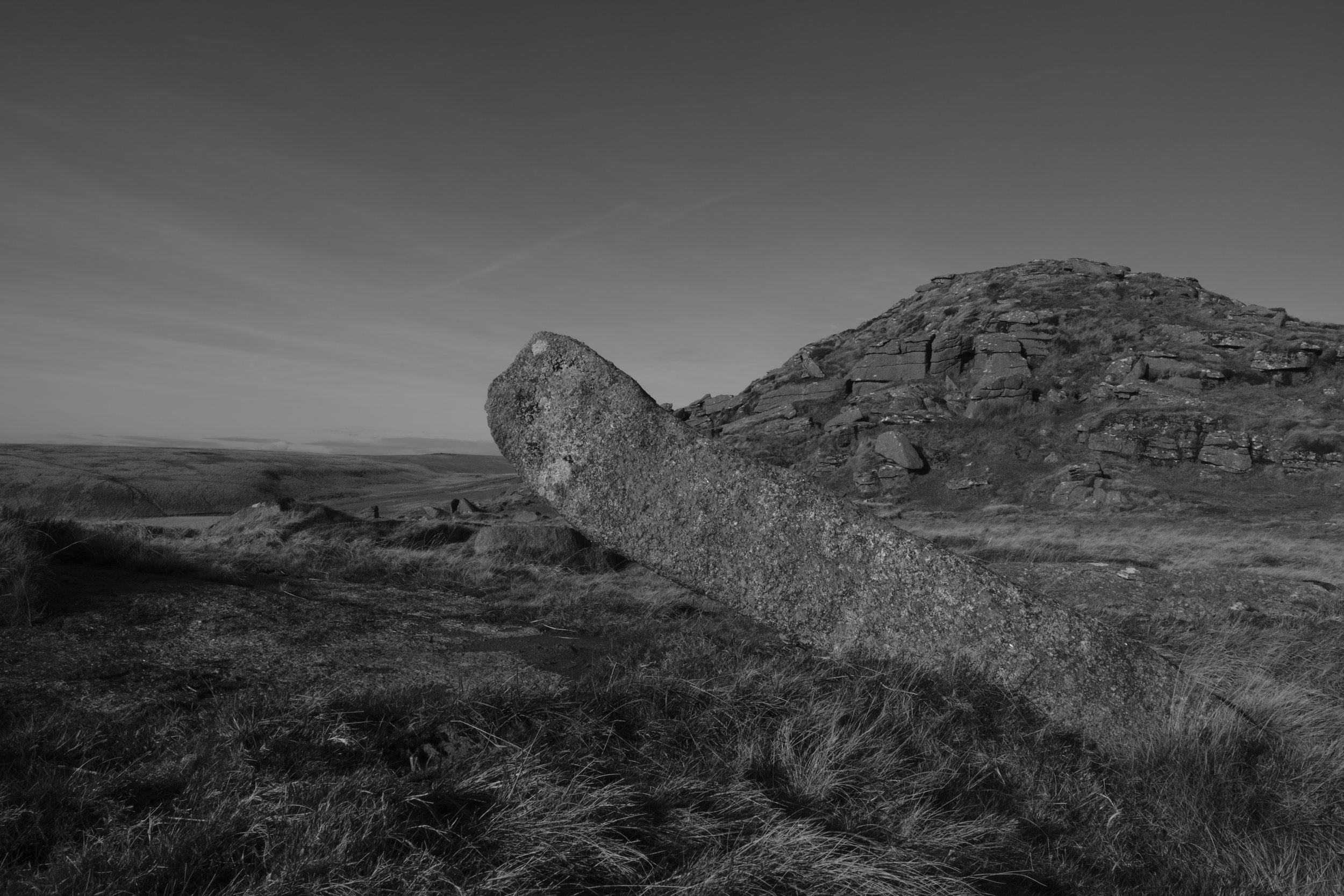
With the first phase over, I was keen to get Dystopia II started before Christmas and I luckily had the chance to do so around The Wistman’s Wood Circular route. I downloaded the All Trails app on my phone which gives multiple hiking routes from people who have walked them across the UK and saved some of my favourites to try. The thought process with walking circular routes rather than my previous approach of going to key points of interest and finishing the shoot there is to give myself more time to really connect with each landscape without having to worry about cramming in another location in the same day. Walking the whole route enables me to see more of the landscape and take more time without being concerned about missing out on other spots.
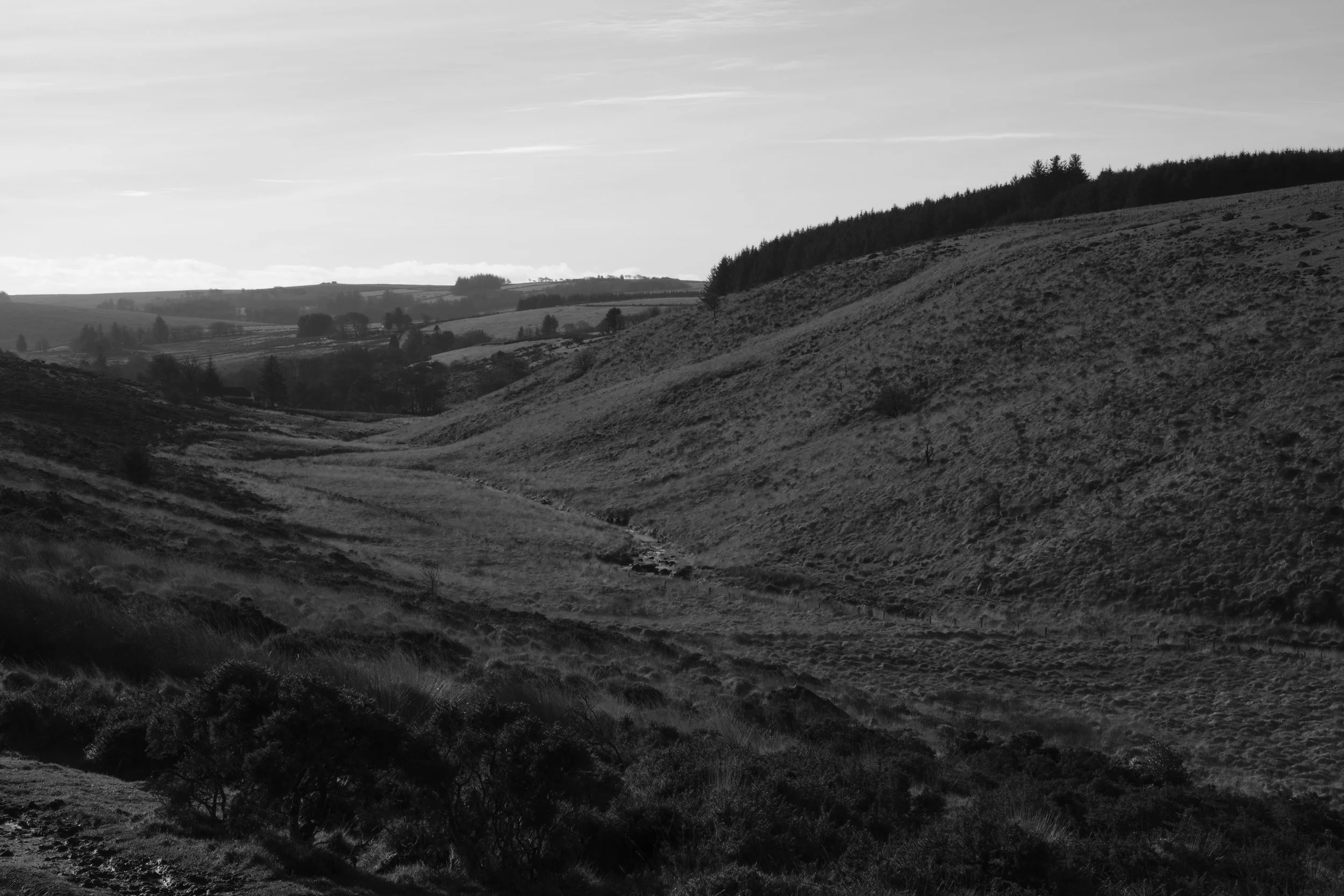
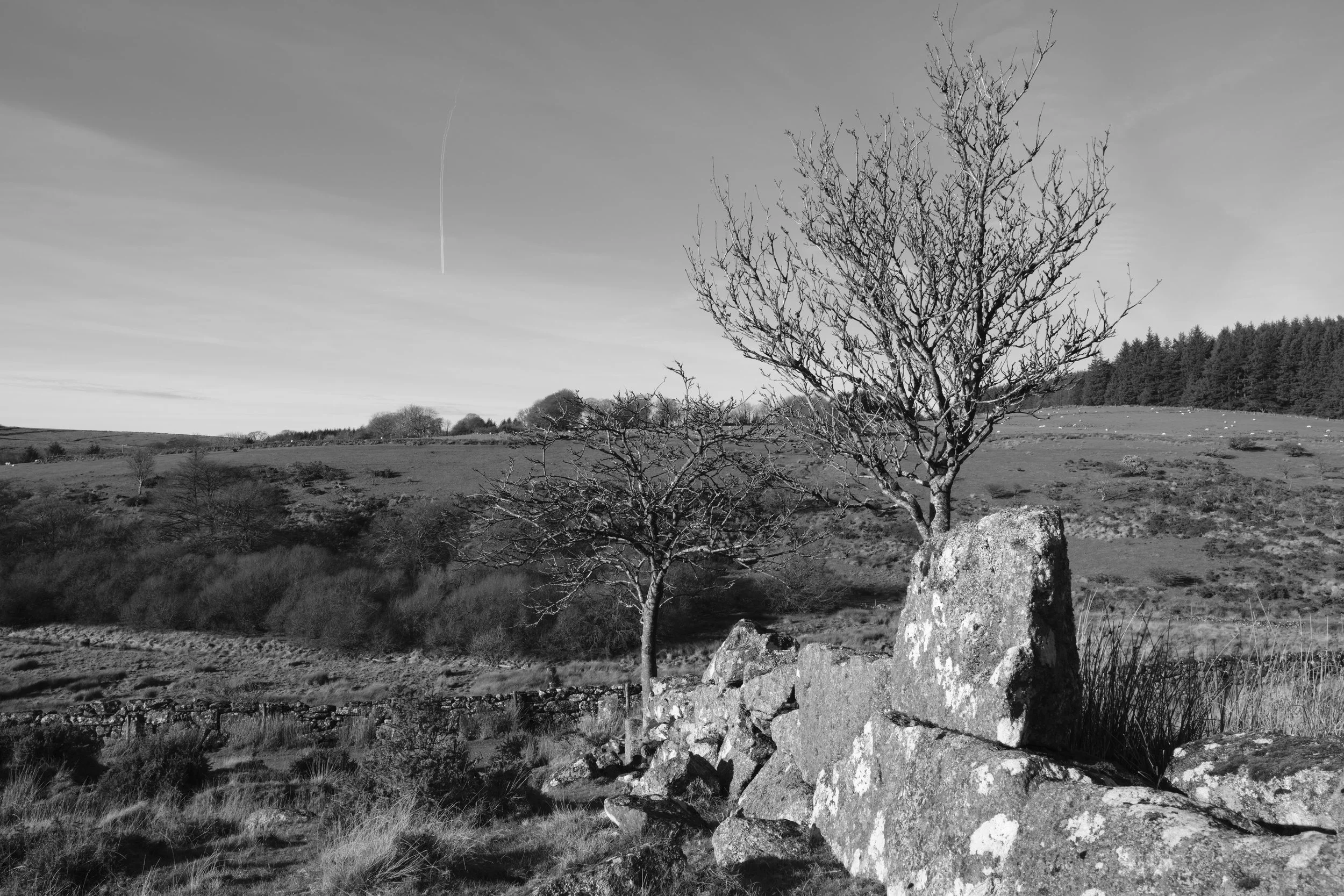
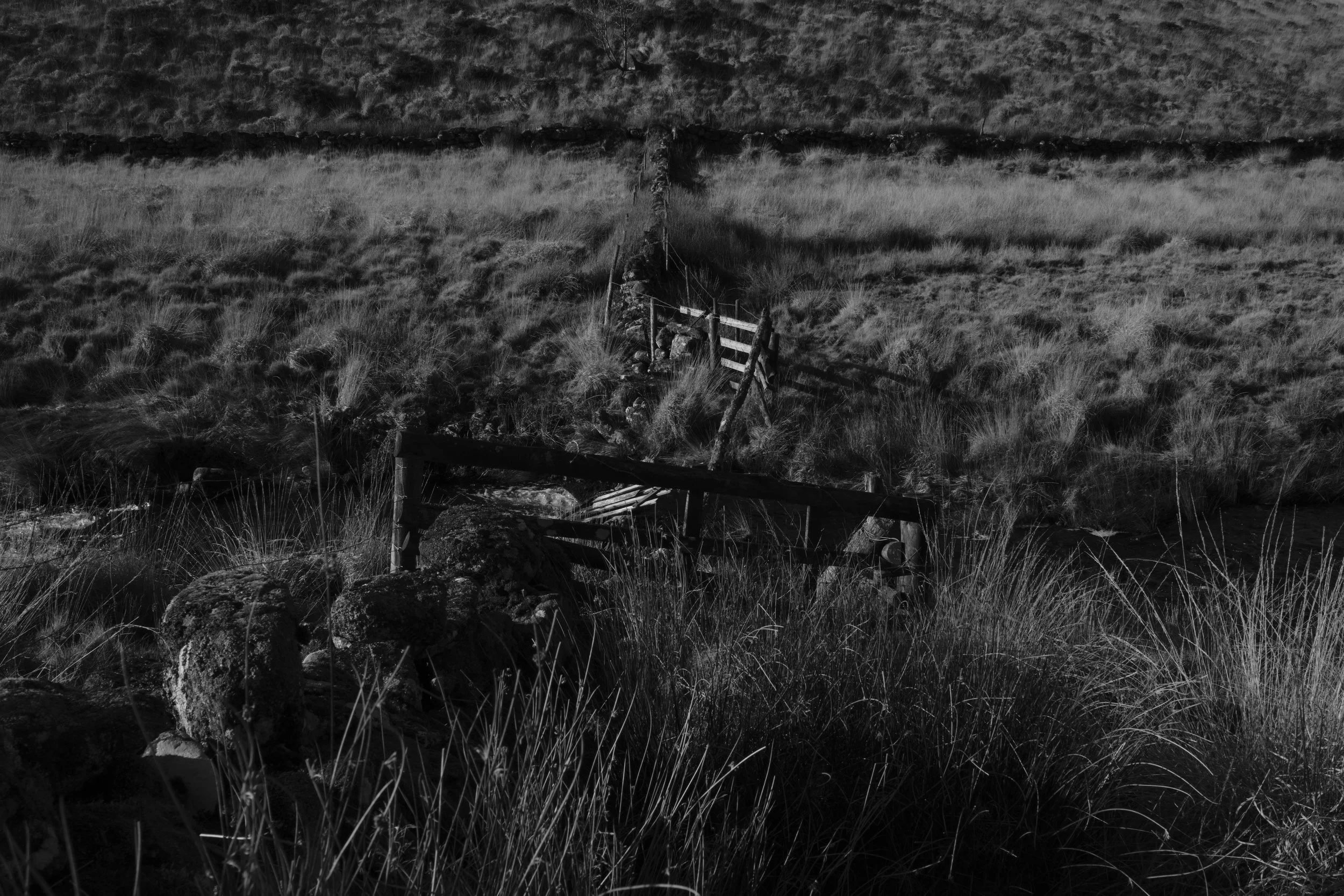
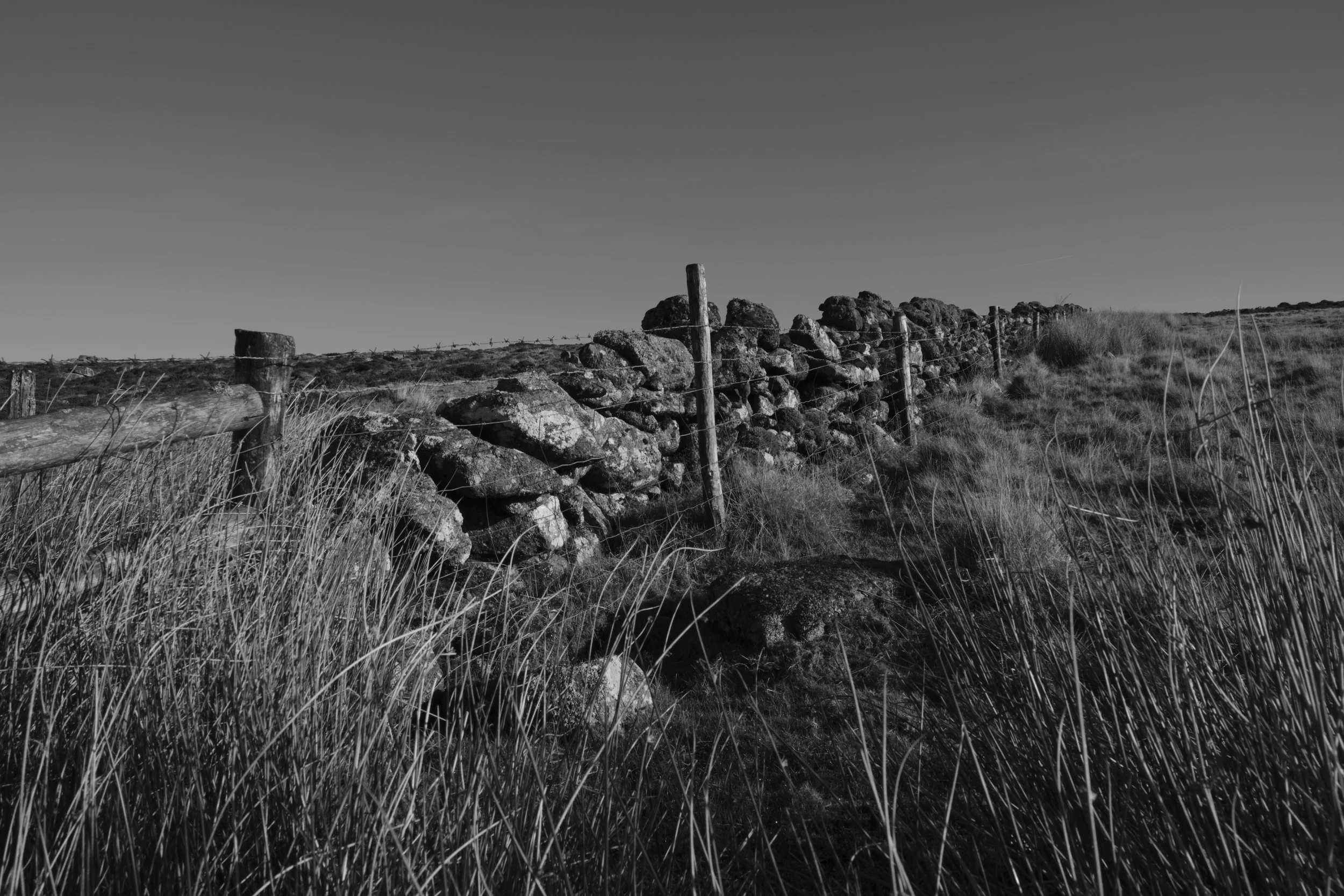
I started the route in familiar territory, along the path towards the main woodland area. Even though this was somewhere I’d already visited I treated it like a new location and continued shooting as normal because the conditions were slightly different to the previous time I had visited. This made me interested to see whether the outcomes would differ as well in terms of mood, aesthetics and narrative. I did divert off the main path a little bit too in search of new compositions because the route was one single path and I was confident that I could get back to the main path regardless of where I ended up thanks to the app.
I was especially fascinated by the restrictions in the landscape that mankind had put as barriers. They evidenced conflict due to the poor condition of the fences and fear of something beyond what we can physically see because of their existence in this environment in the first place. The walls are representative of our species’ addiction to feel in control of given situations rather than allowing the landscape to flourish naturally as it might have before us.
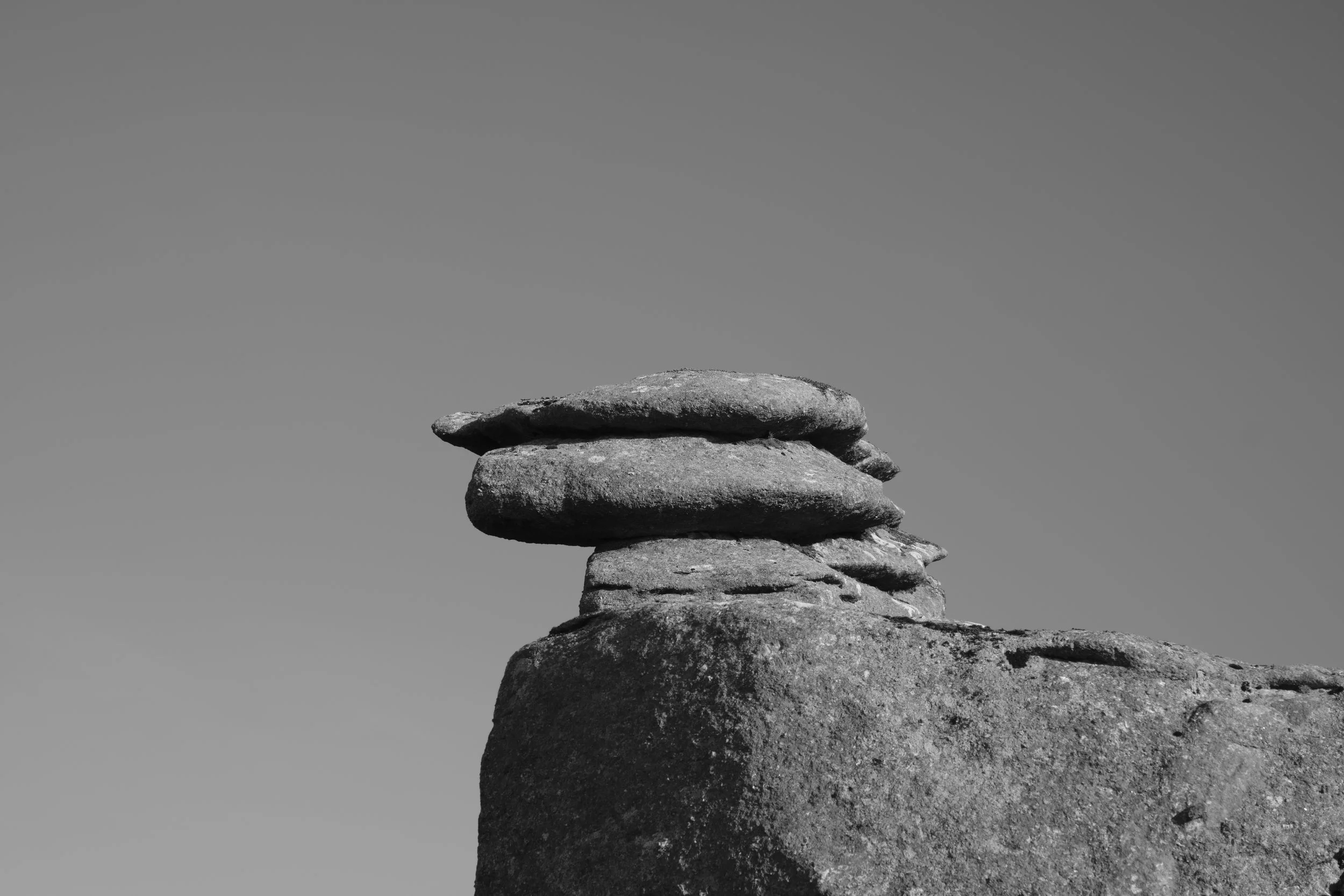
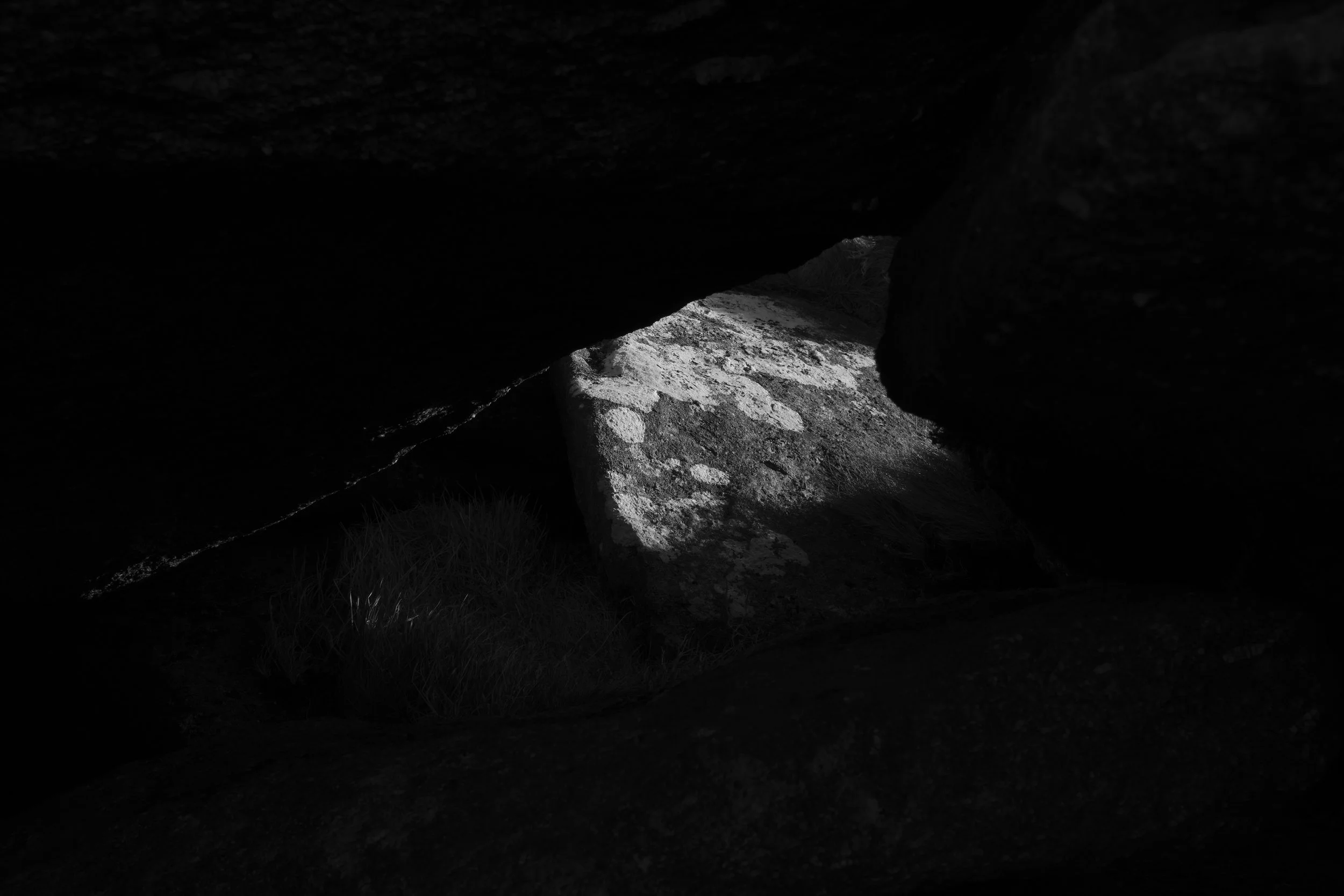
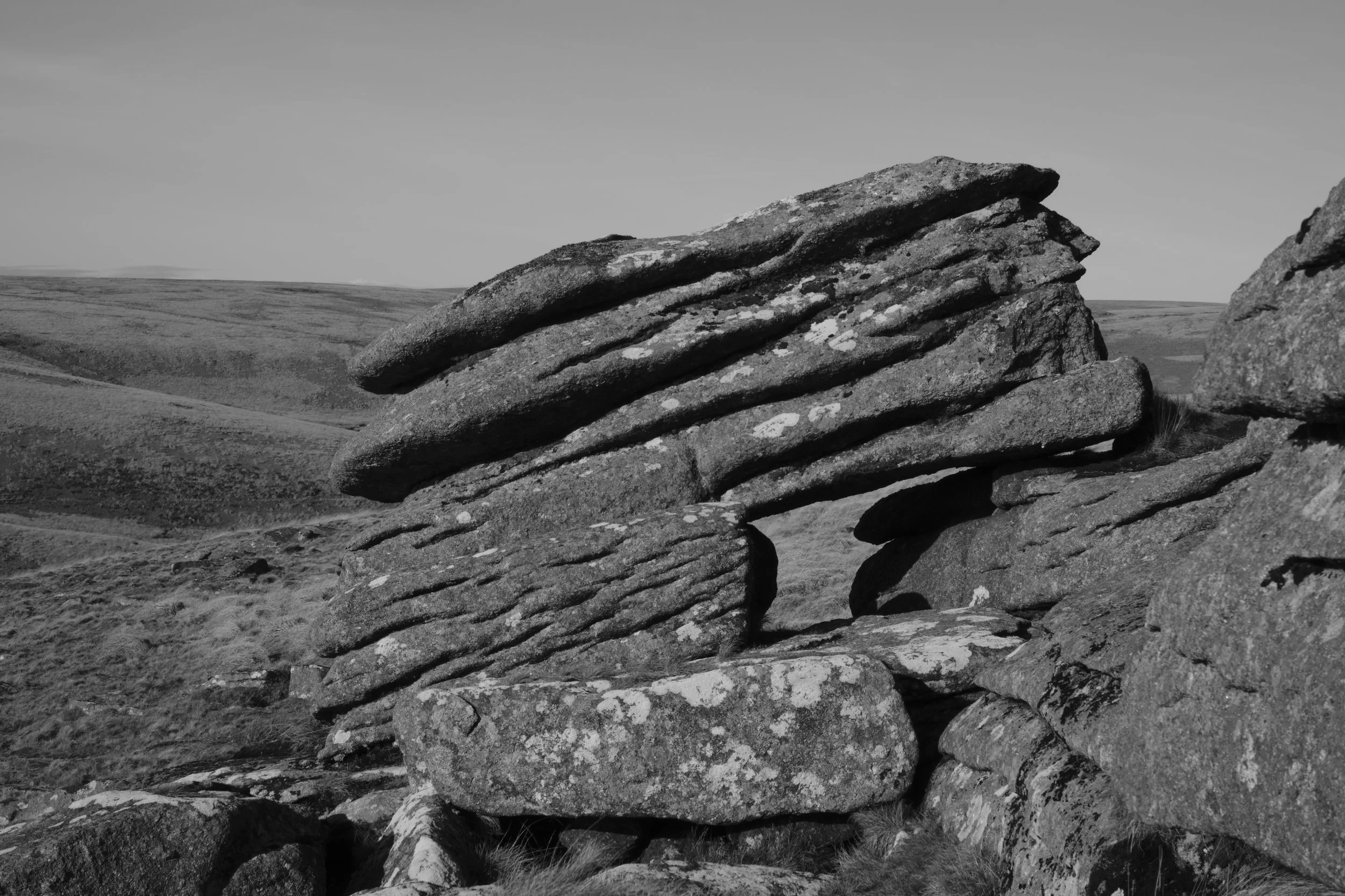
One of my diversions off the main path led me to Littaford Tor, a small formation of rocks just 5 minutes away. I spotted them from a distance and they interested me to the point that I had to take a look. The area was made up of a split between scattered and stacked rocks which was intriguing to question. How did the rocks get to the point where they look stacked in the first place? I would assume erosion over time has made them have this appearance but I couldn’t find an answer from my post-shoot research into the area.
Littaford Tor produced one of my favourite shots from the walk (top right of the mini-gallery). This shot was in a little gully beneath the giant monolith and shows a streak of light peaking through to light the rock beneath. It summarises the type of content I wanted to get out of walking the circular route in terms of showing a level of experimentation in composition and framing yet producing a refined result. In relation to the wanderer’s experience of the area, this could symbolise them sheltering from the harsh wind under the rock to rest but are unable to due to aspects of the dystopia (the light) still managing to penetrate an area they feel is safe.
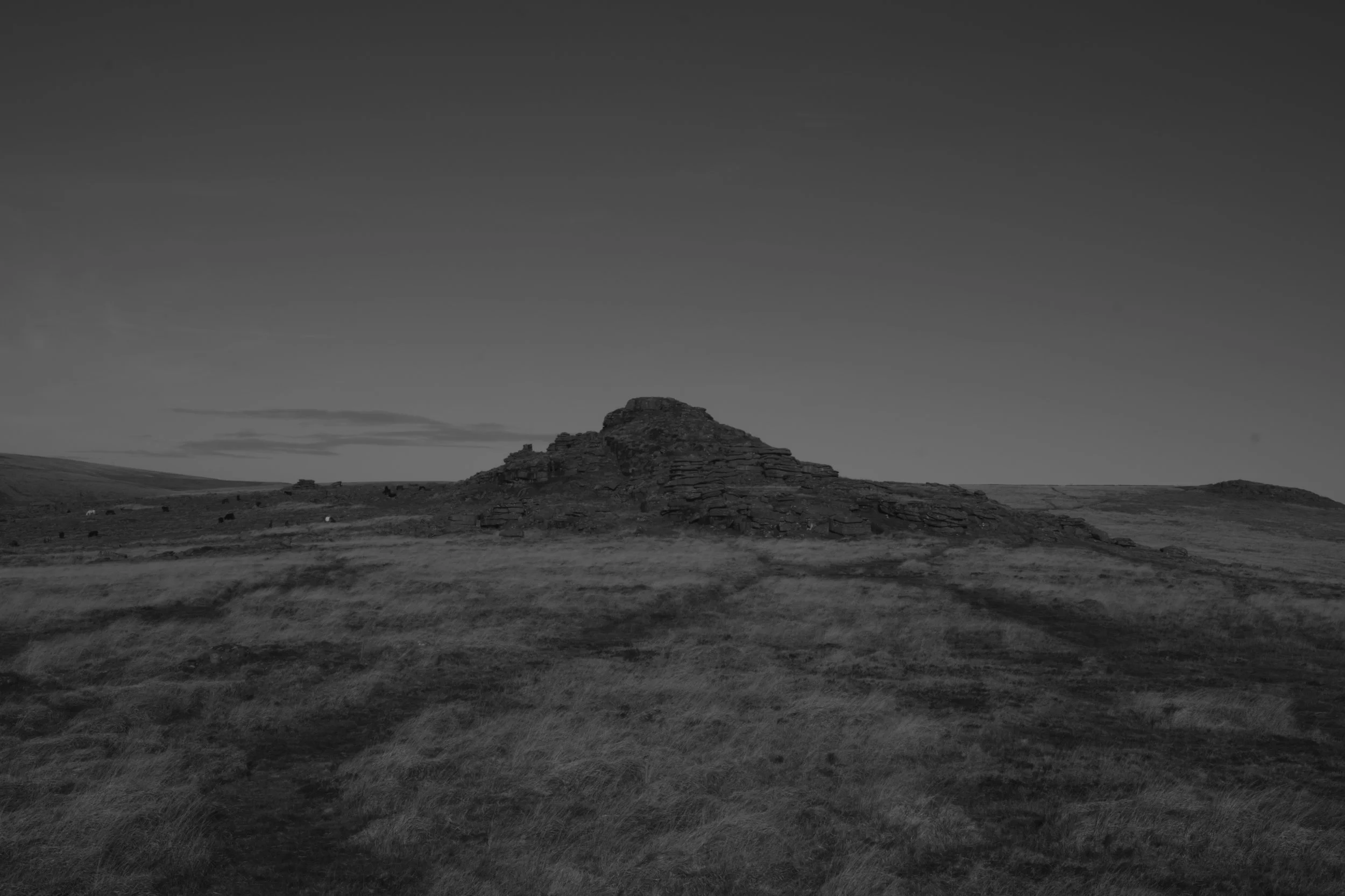
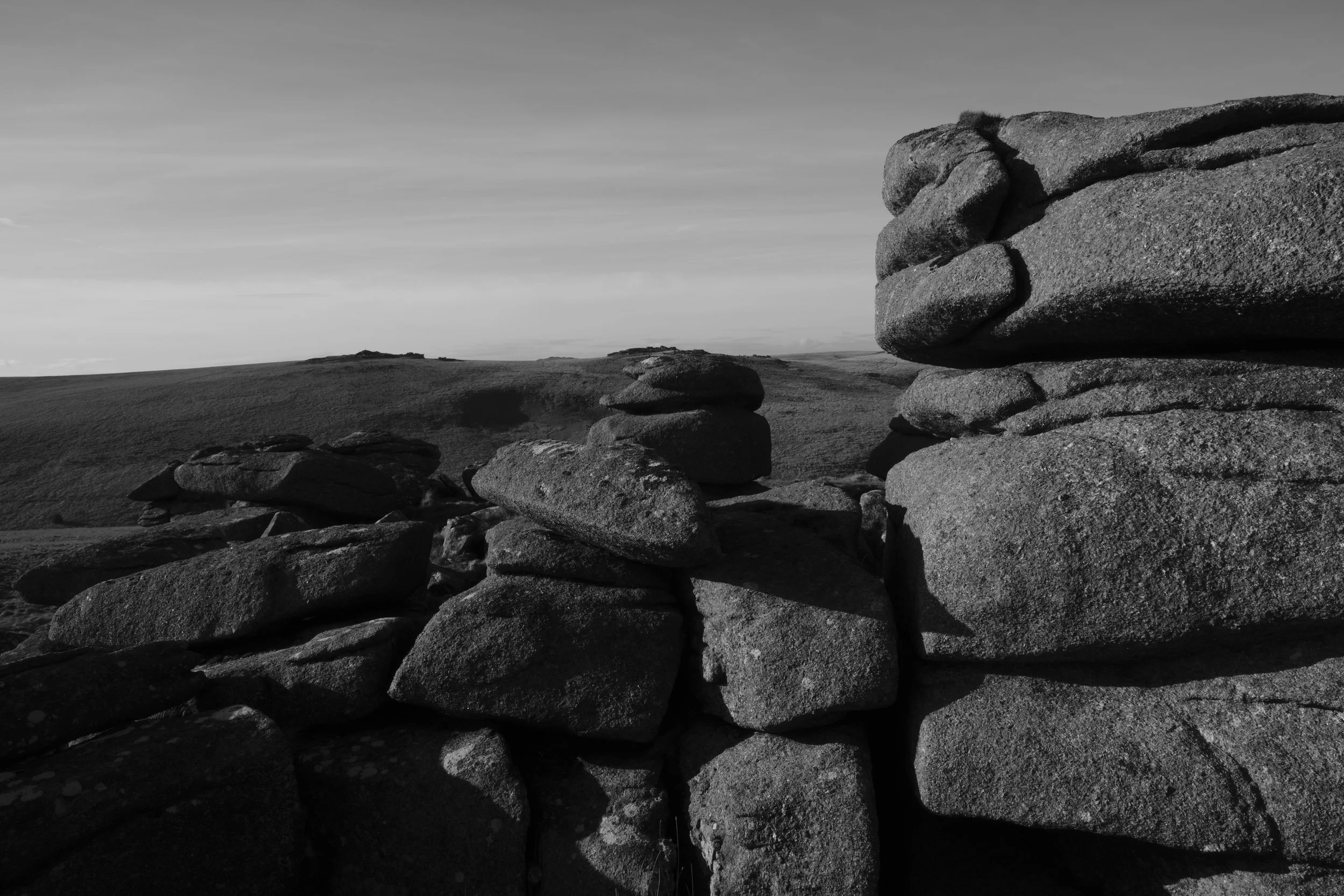
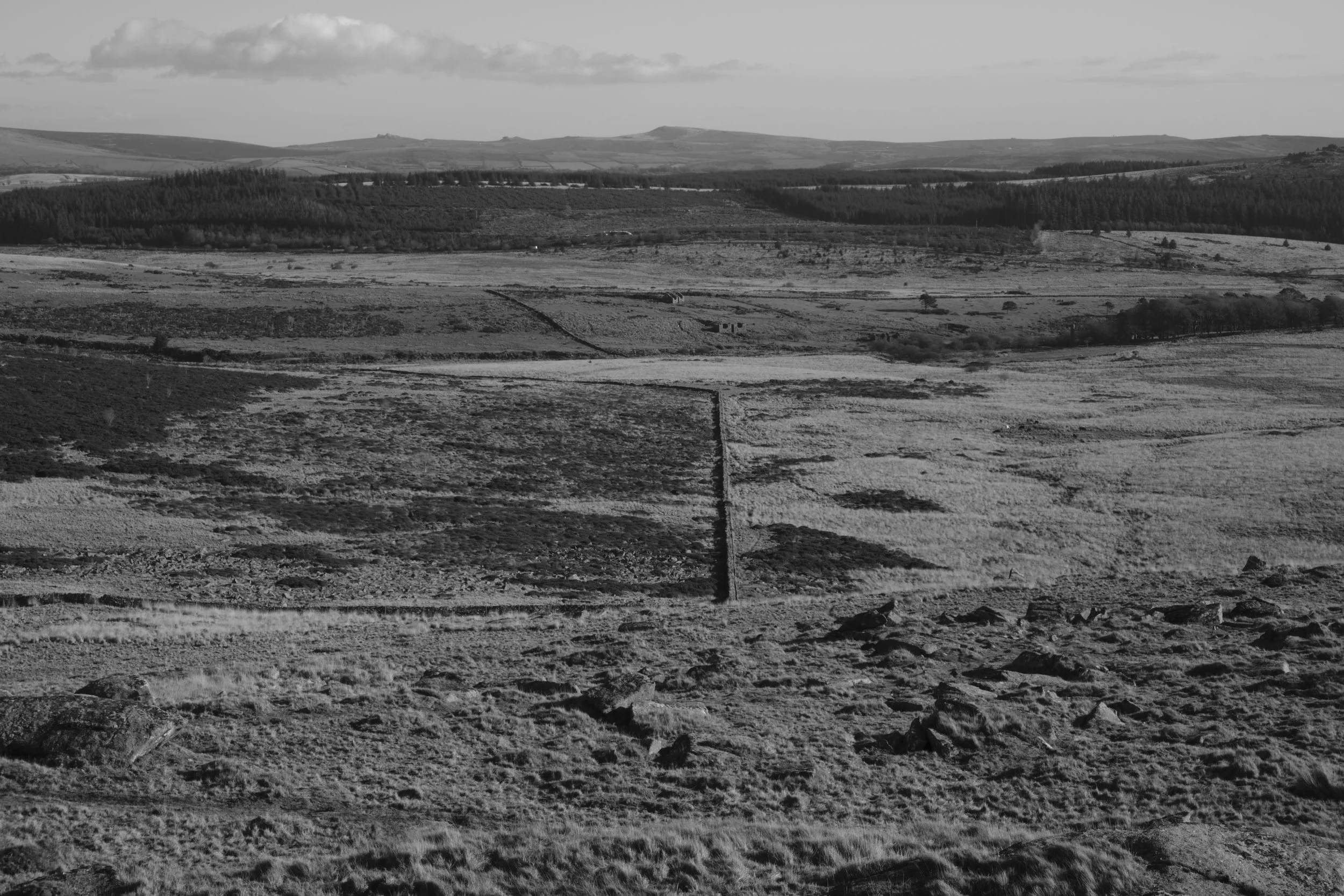
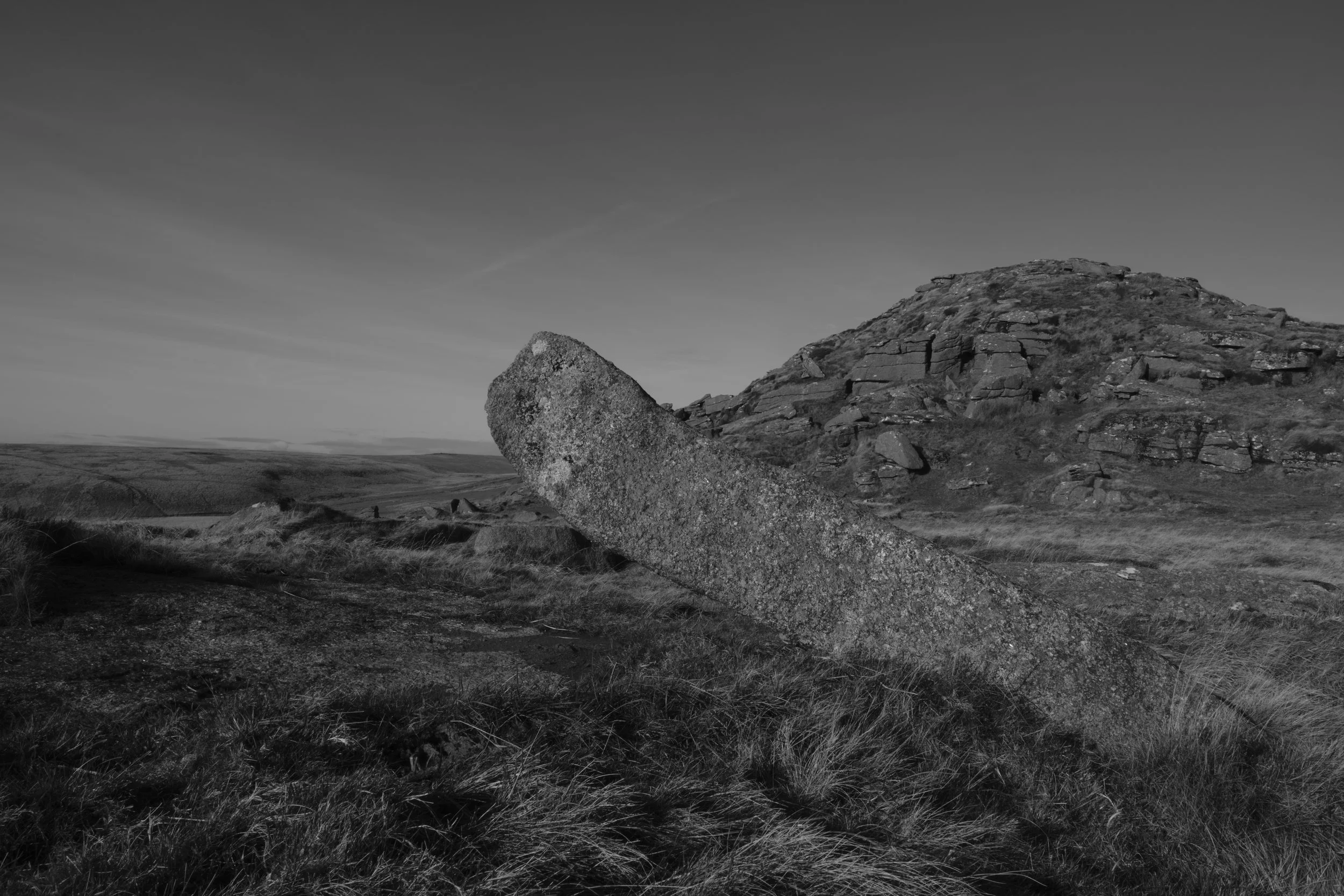
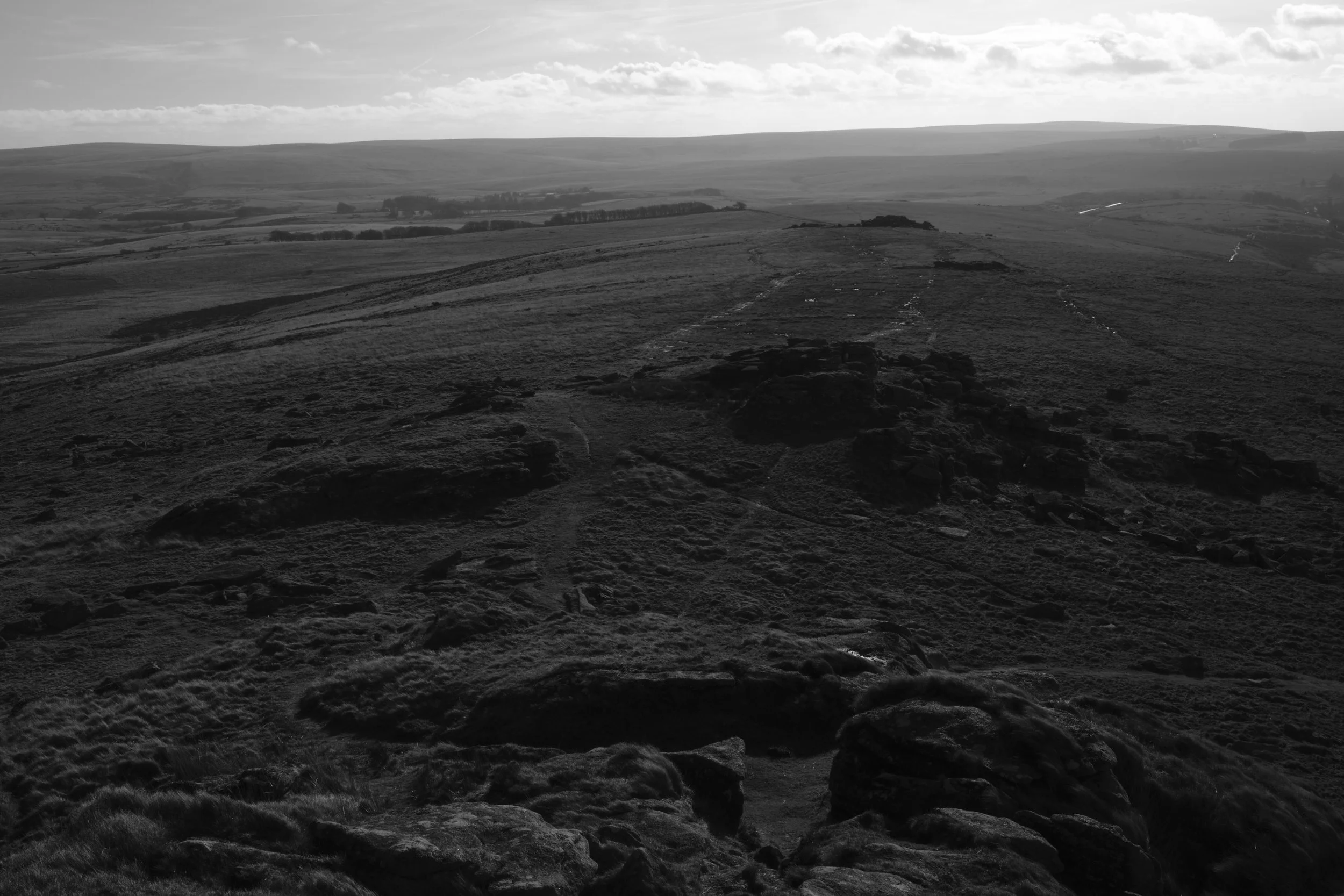
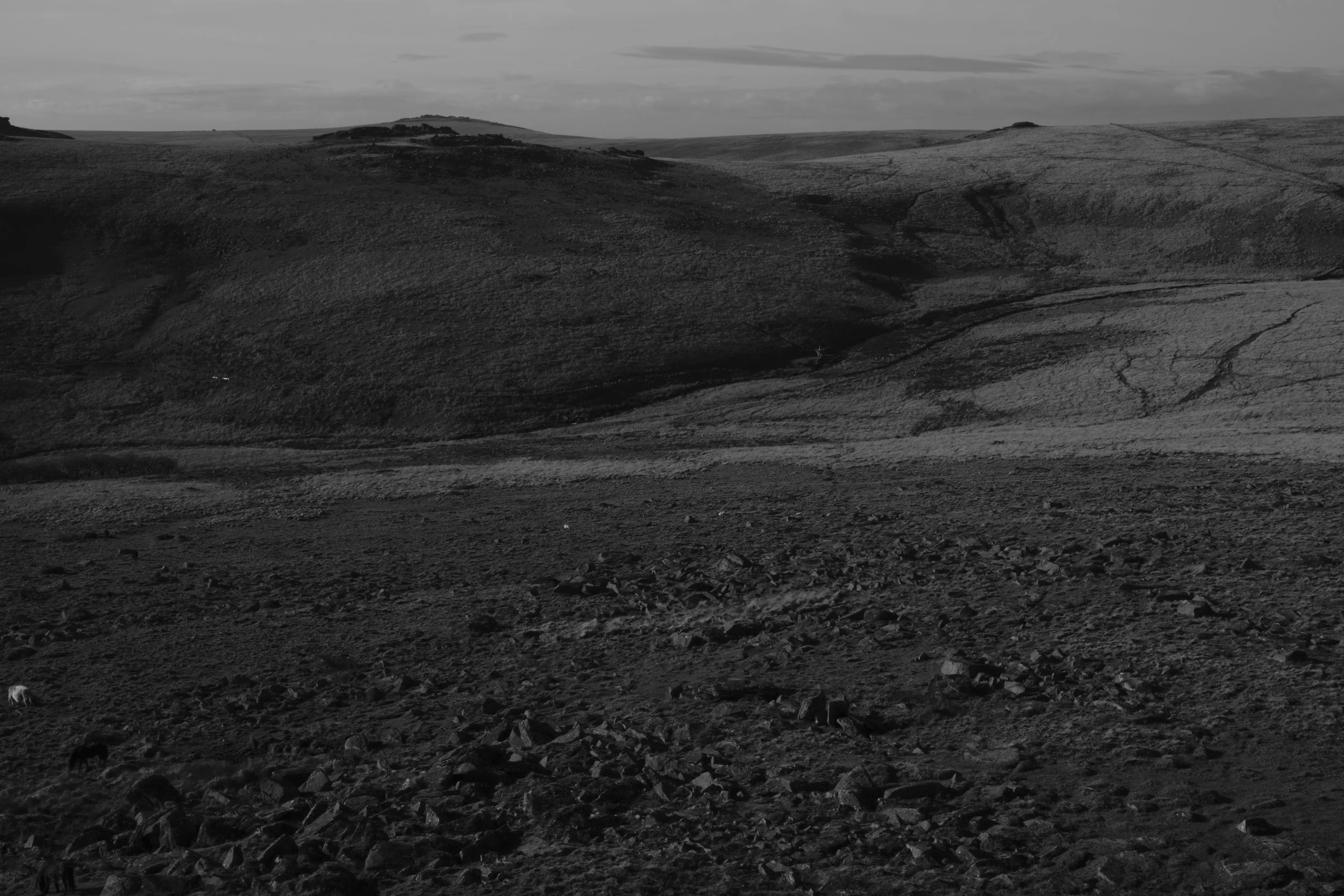
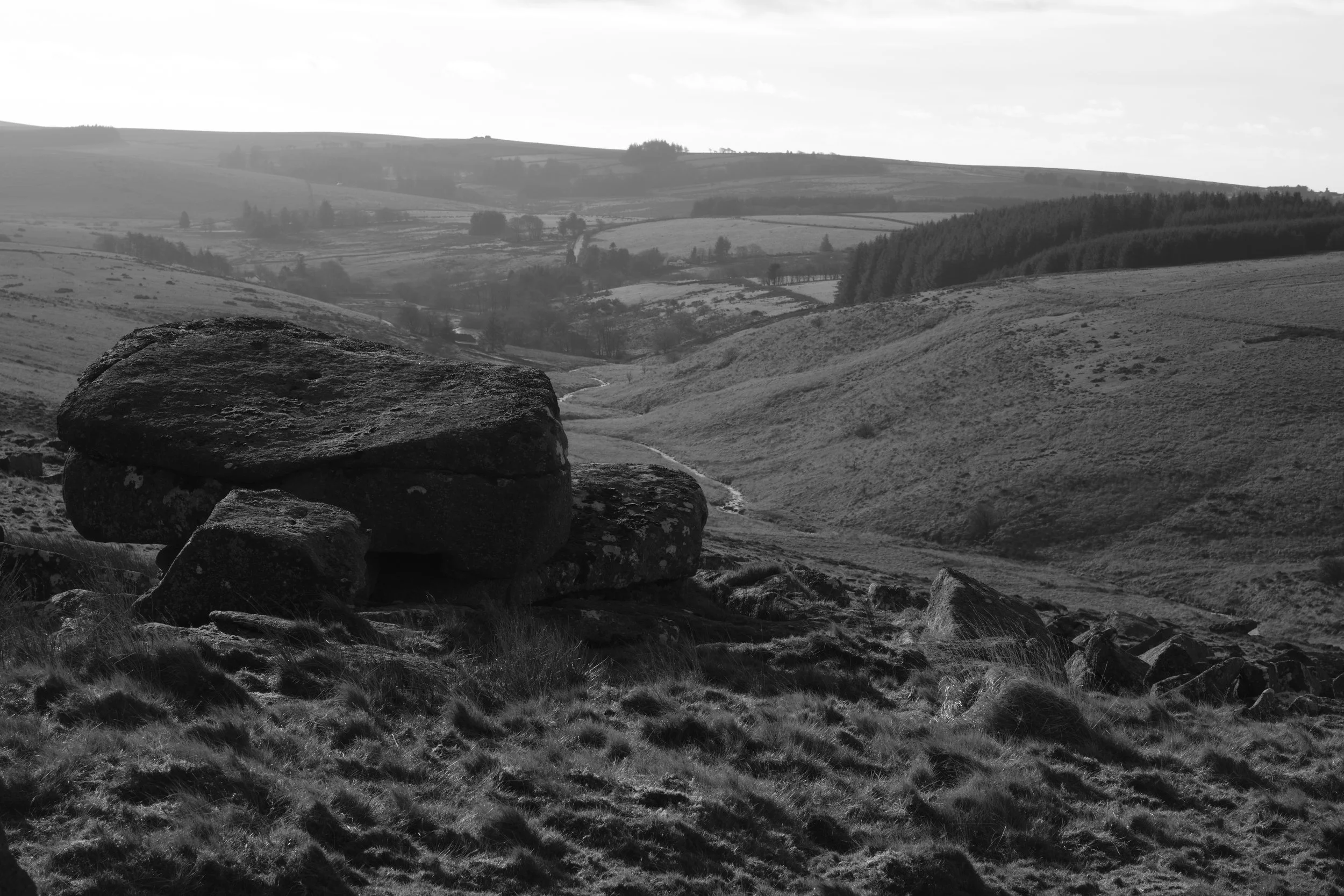
I then moved onto Crow’s Tor which again was a short walk away from Littaford Tor. At this location I started experimenting with my aperture to make the scene darker as seen in the first photo. This will have some relevance later on in the walk but the wide shot of the Tor was a good opportunity to get my eye in with this method and see the impact that shooting this way would have on my work.
The beauty of this spot was that I could climb to the top and shoot down from a birds eye view rather than looking up from the bottom, very much like at Yes Tor in Dystopia I. This was the first real feeling of having a 360 view of a landscape though because visibility at Yes Tor wasn’t as good as it was here. This led to some intriguing results as I was photographing from the same spot looking at the same landscape in different directions, yet each image feels like a different place.
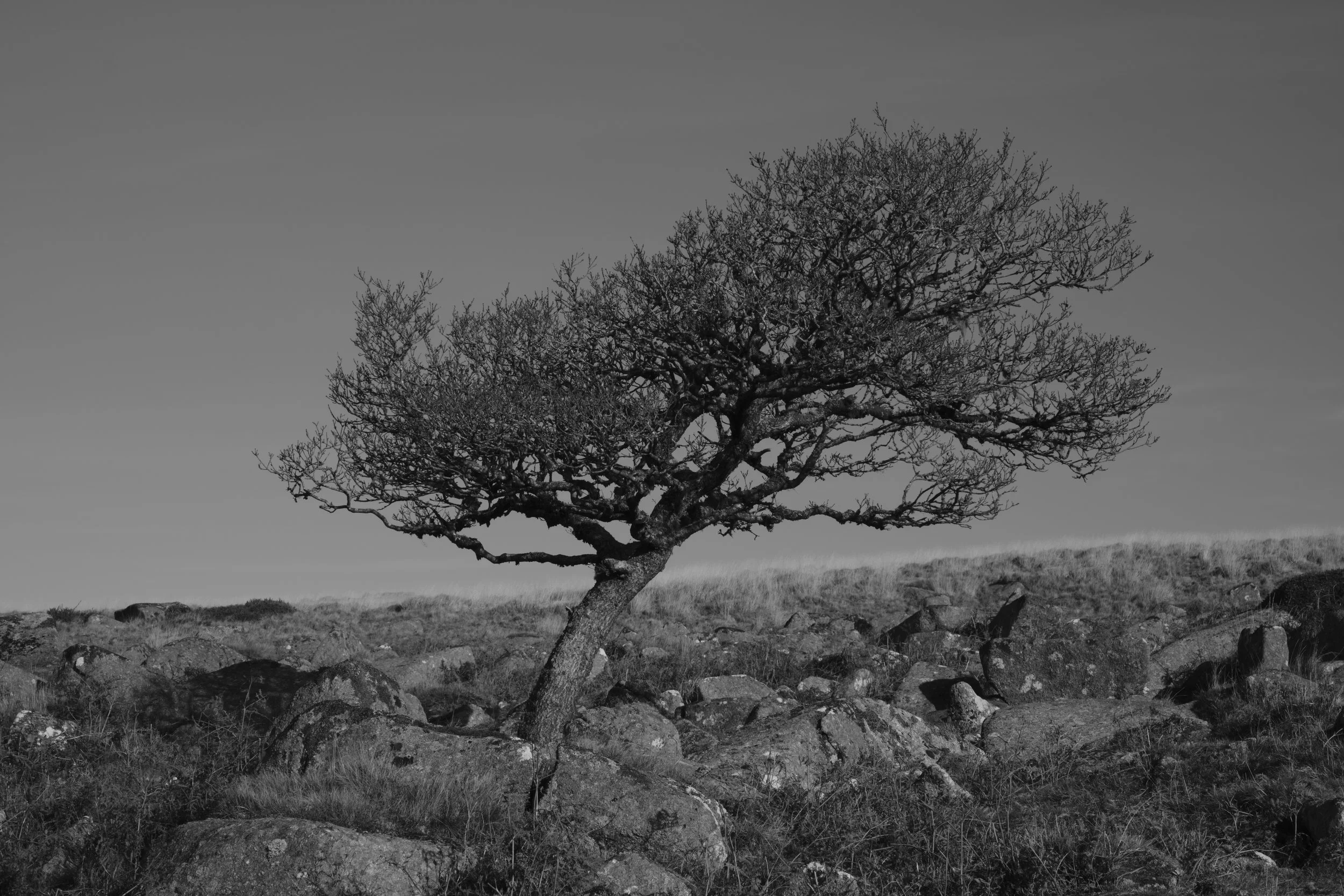
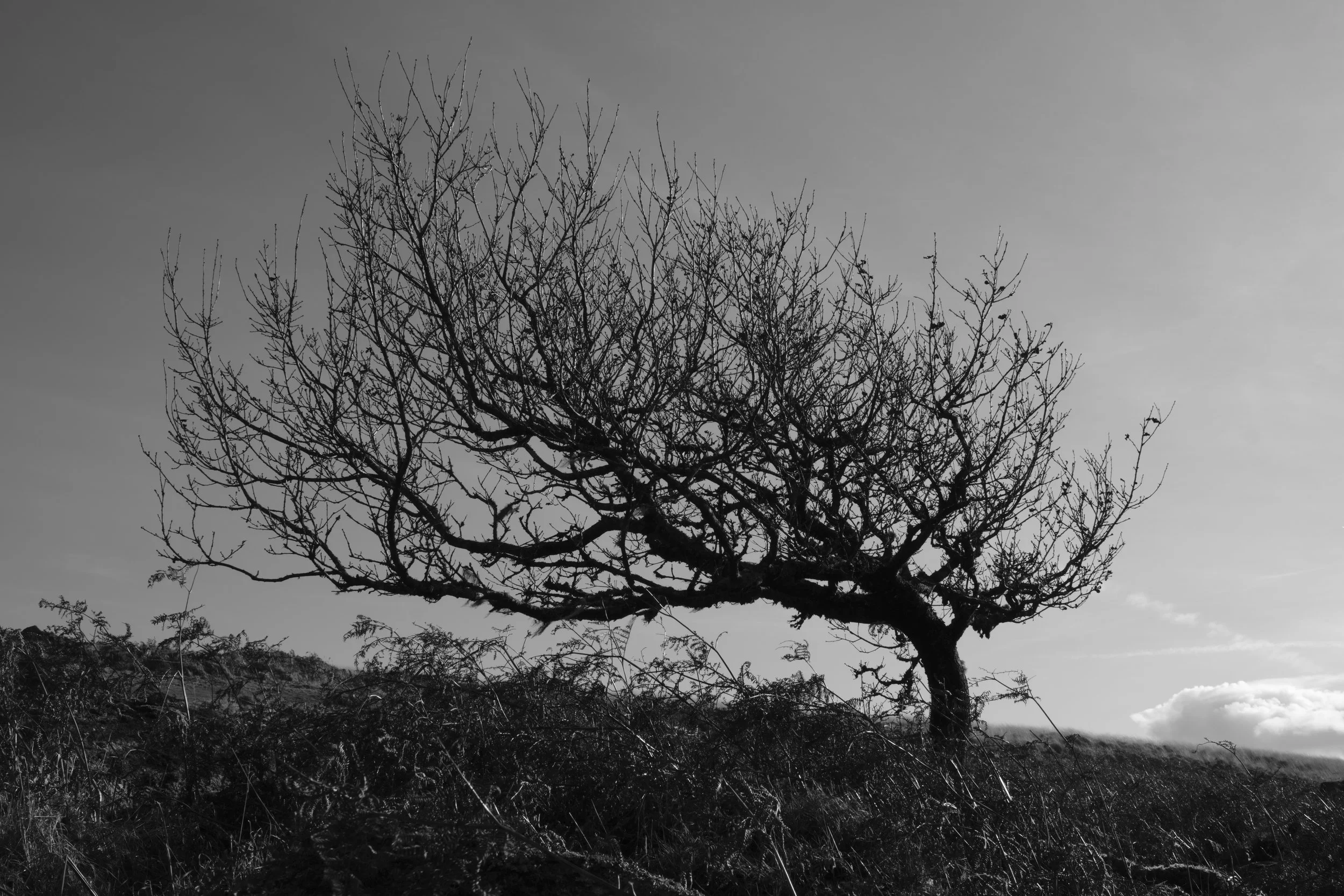
On the way back to the main path, I came across a copse of trees that got me back into the lore of isolating them and giving them anthropomorphic characteristics. Looking back at the individual tree shots, the word “barren” springs to mind due to the rockiness of the terrain and the lack of leaves on the branches, however the existence of the tree shows that life continues to find a way to survive through hardship.
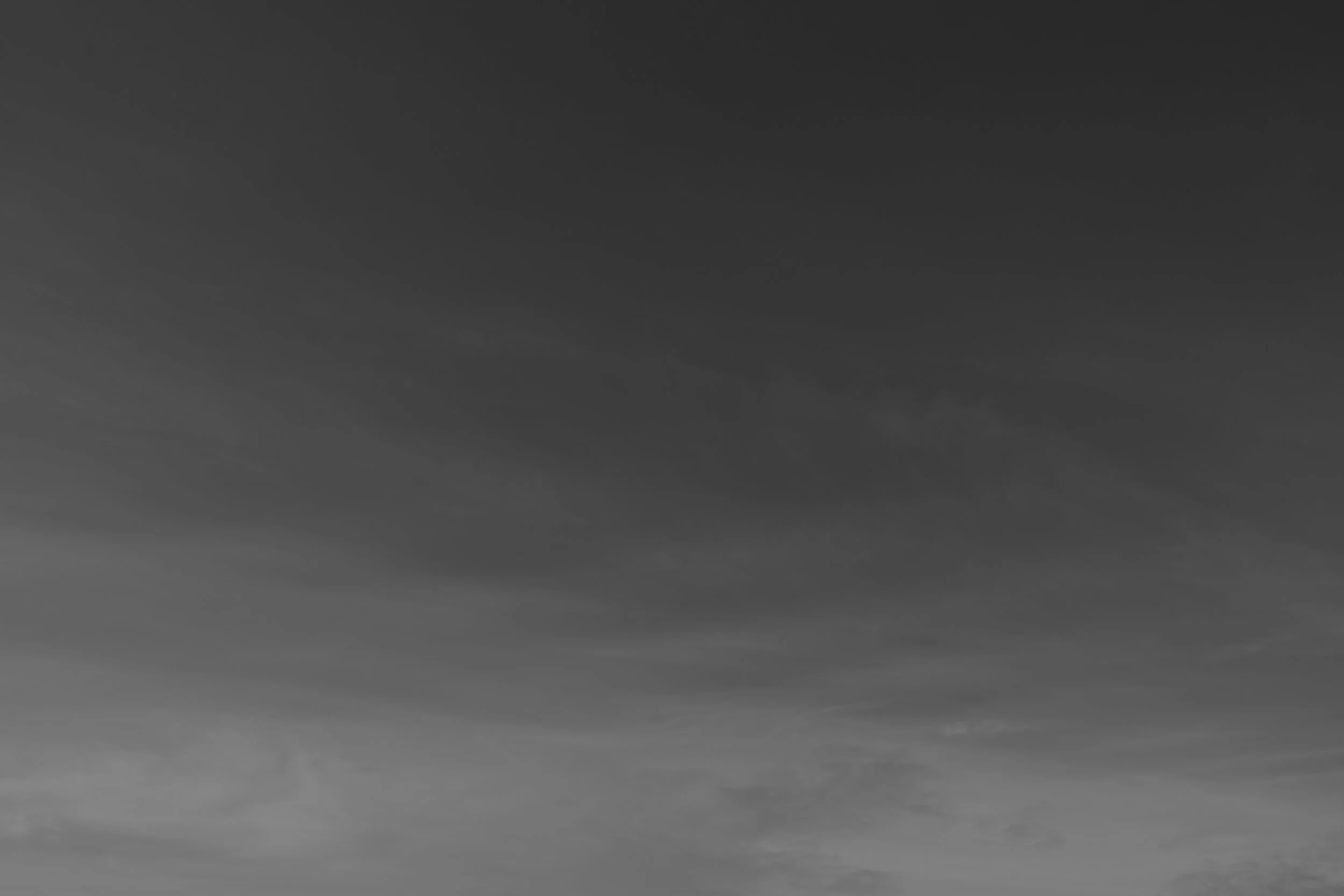
I was also interested by the sky on the way down and had to capture a shot of it. In black and white it almost looks like an exposure of film or a painting, though it certainly doesn’t look like a photograph captures with a digital camera. This kind of unusual perception of reality achieves the goal of raising more questions than answers about the world. It reenforces that, even though we are aware that we are in a dystopia, we don’t actually know why this has come to fruition. There are clues but this shot offers us next to nothing and that’s what makes it so interesting.
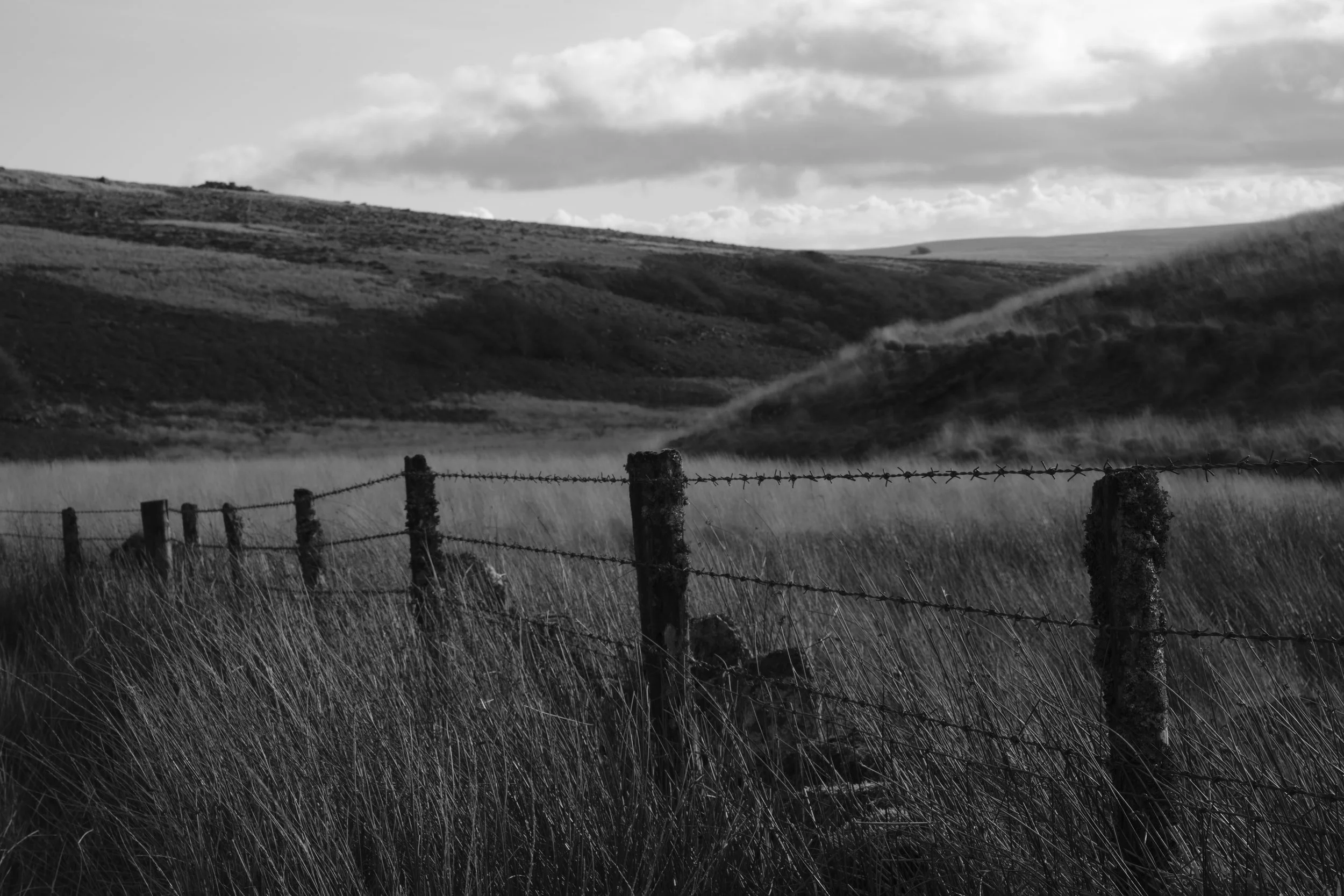
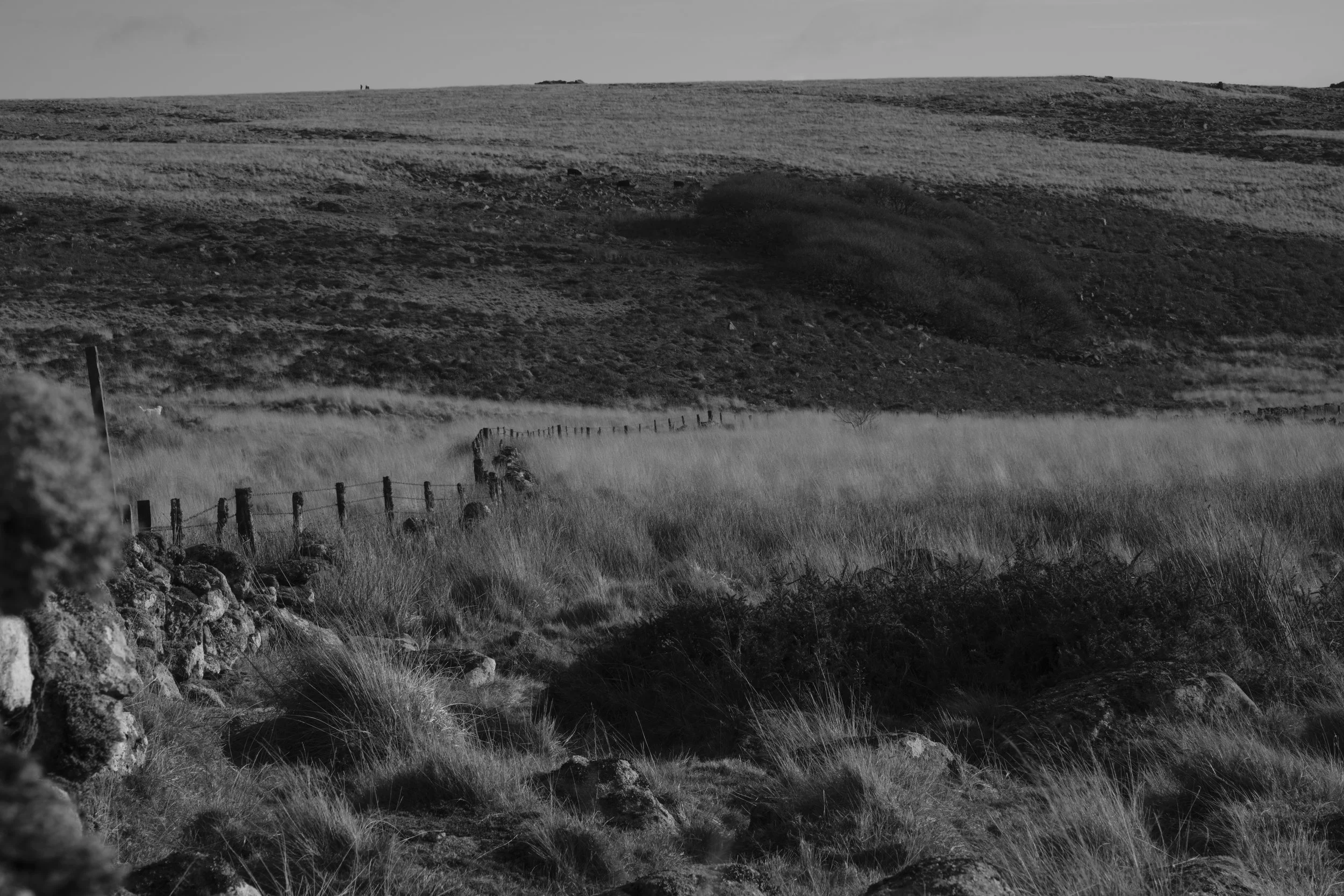
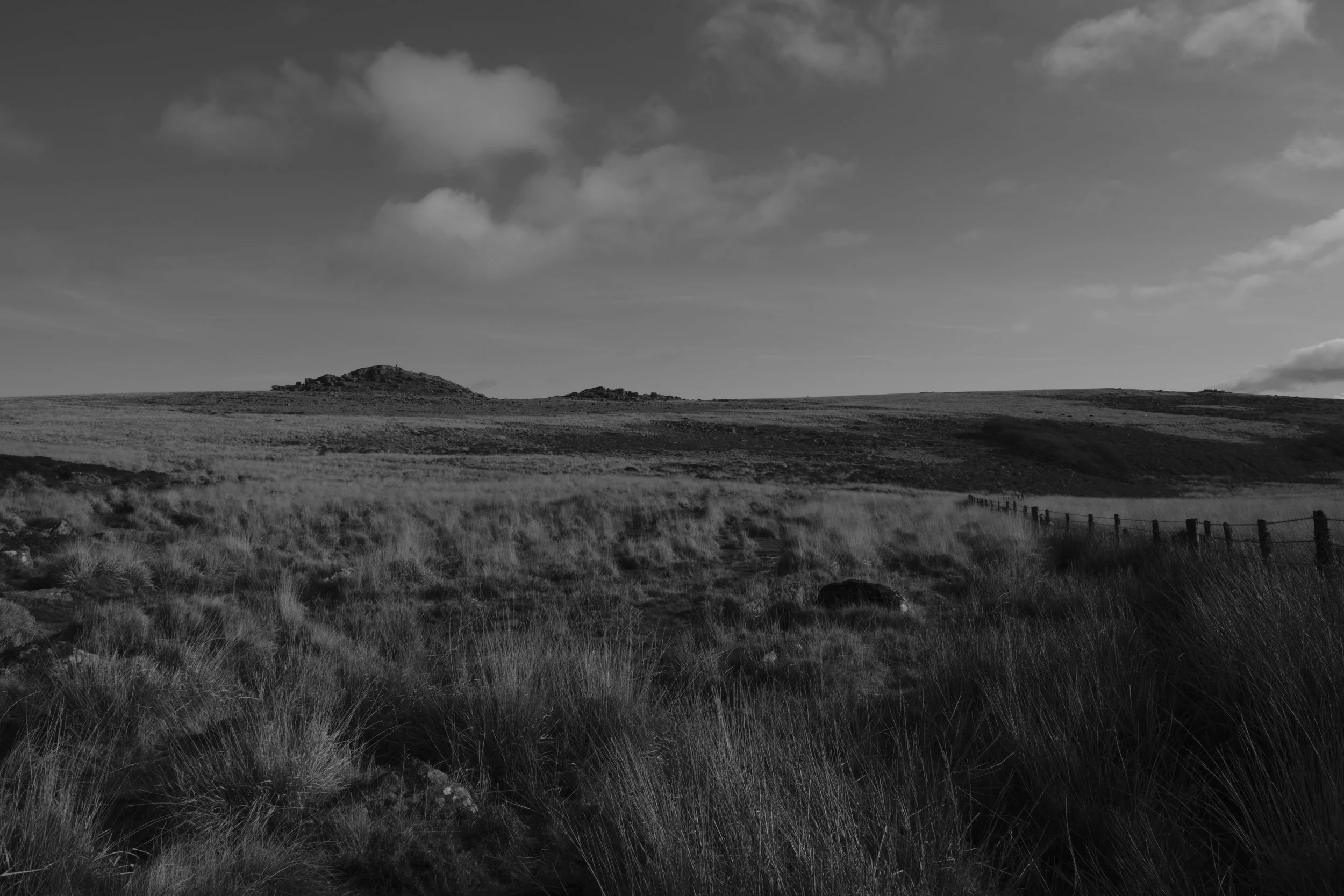
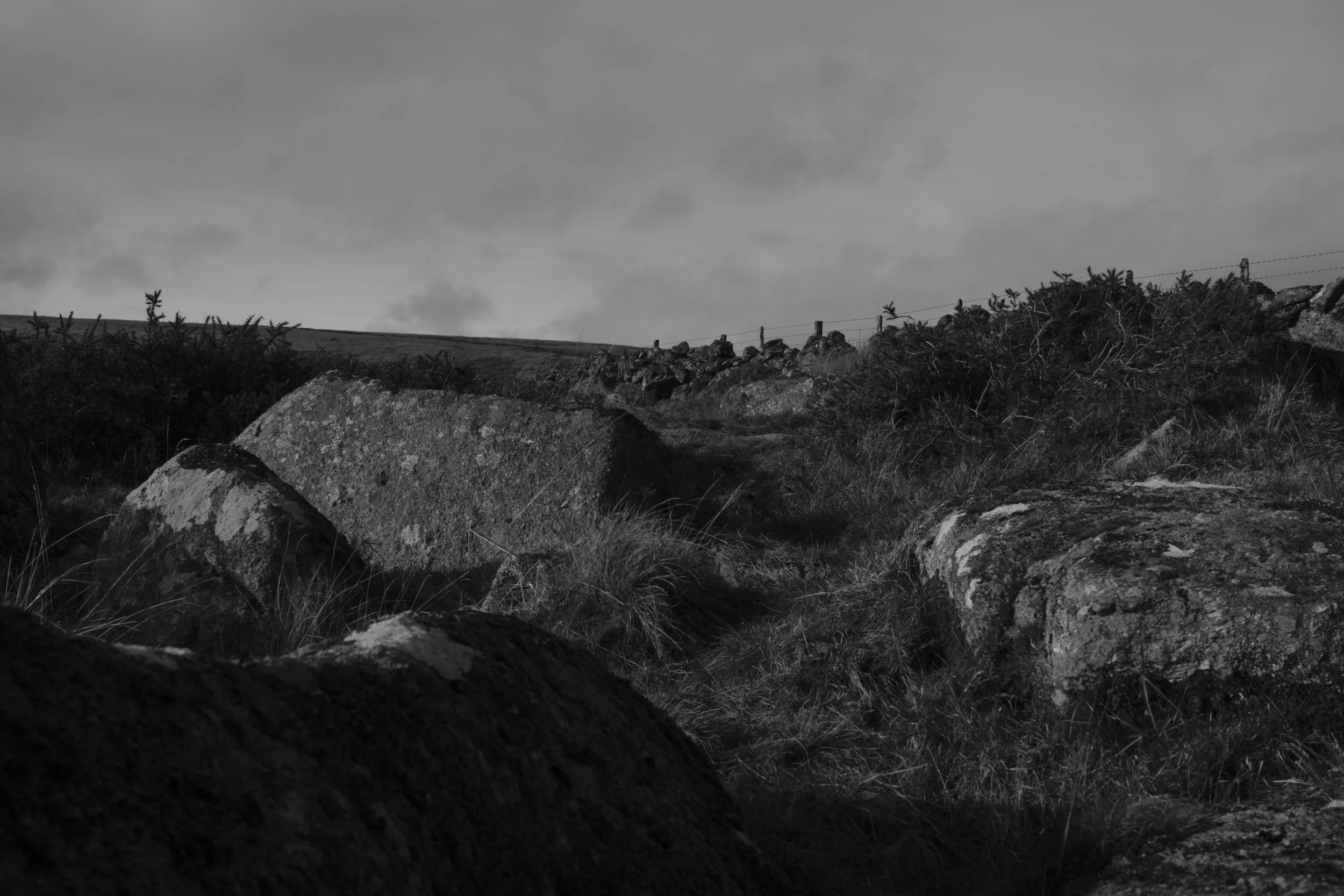
A physical obstruction lied in wait for me at the turning point to return on the opposite side of the stream to complete half of the circular in the form of a barbed wire fence stretching down the valley. I spent some time shooting here and using the fence as a framing device because it provided a good narrative cue. The close shots evoked emotions of confinement and the sweeping landscapes made the setting look like a battlefield or a minefield, as if the wire was a present day warning about something hidden in a seemingly harmless, stunning landscape. It could serve as a warning of a present warning for the wanderer rather than a memory of past danger.
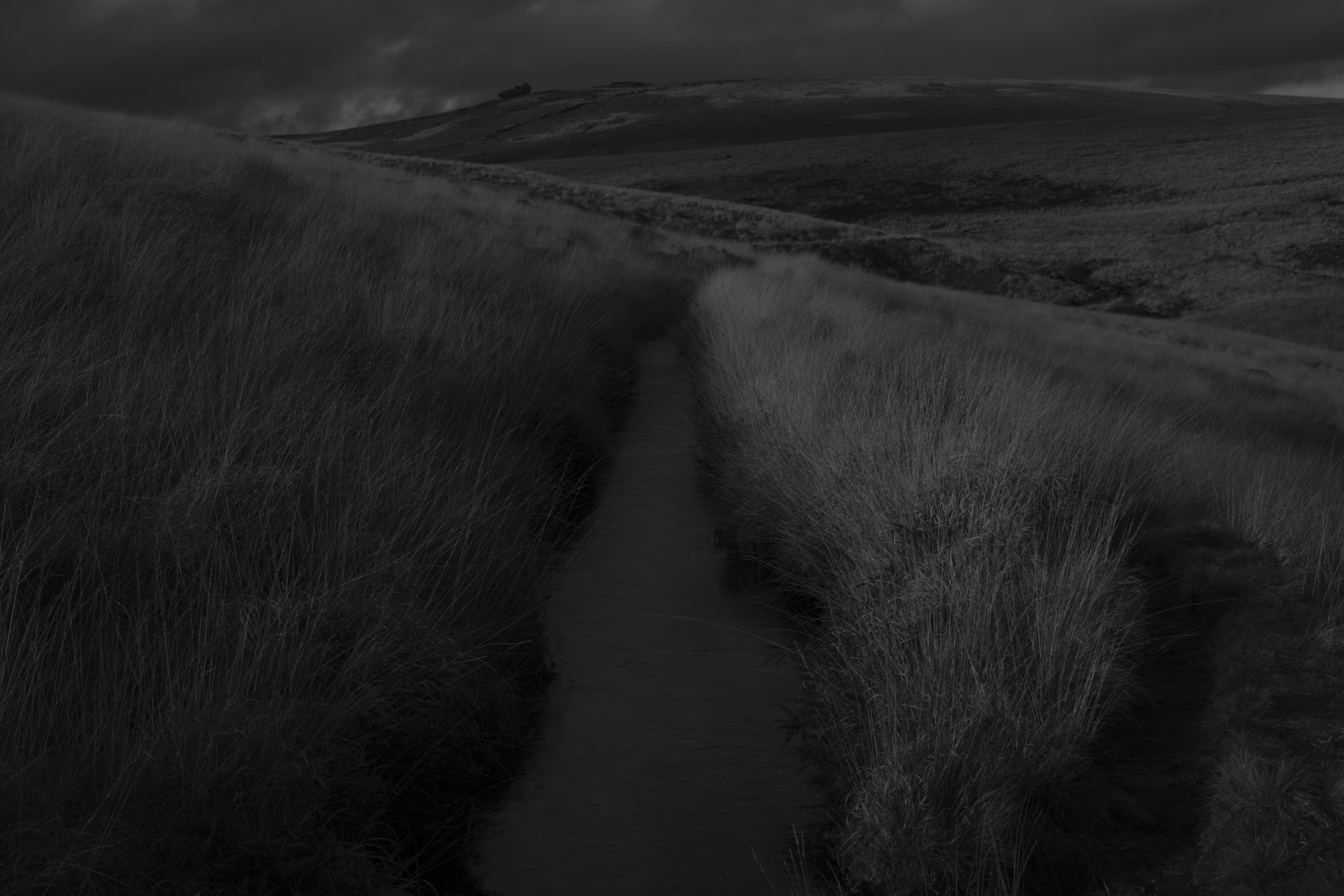
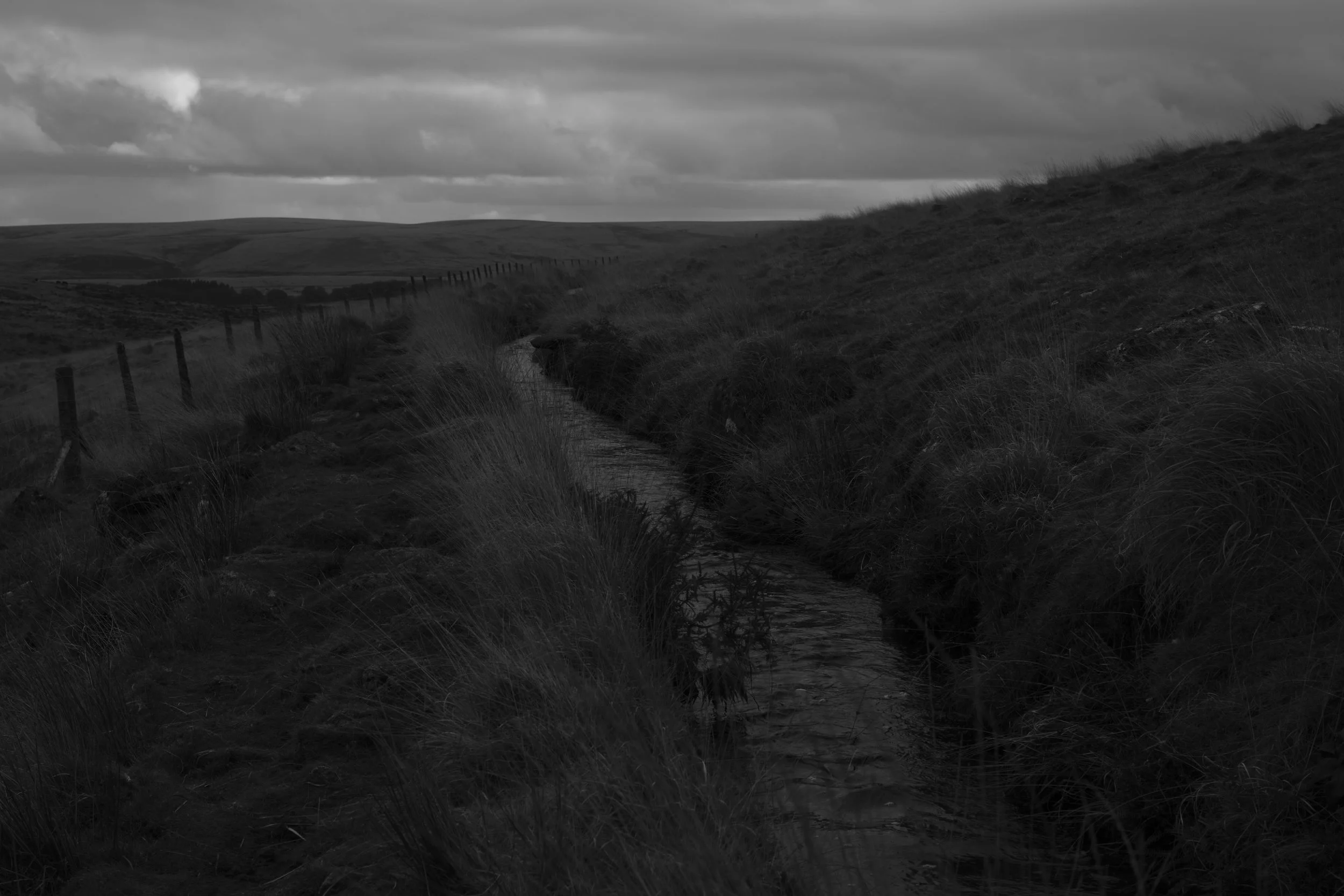
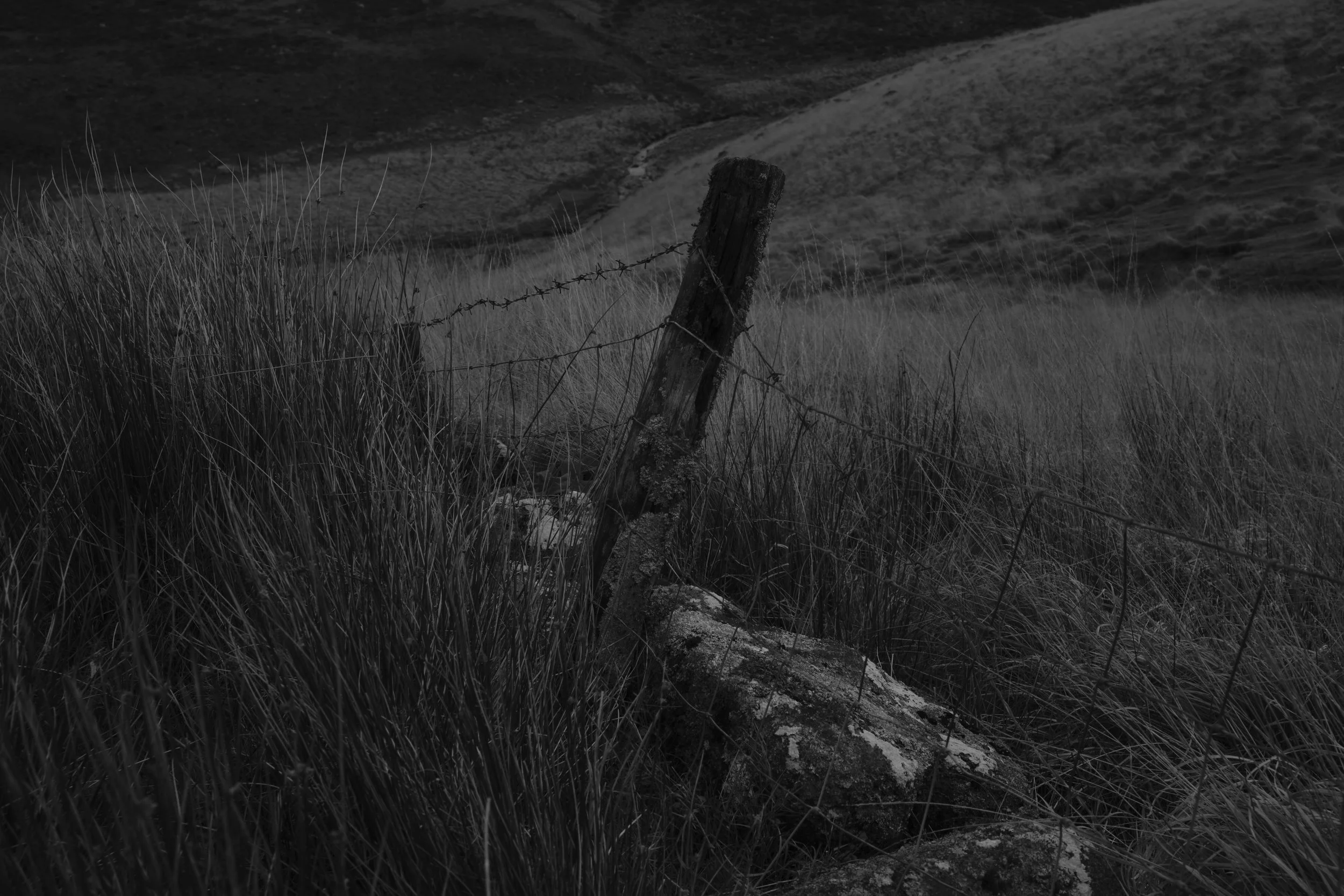
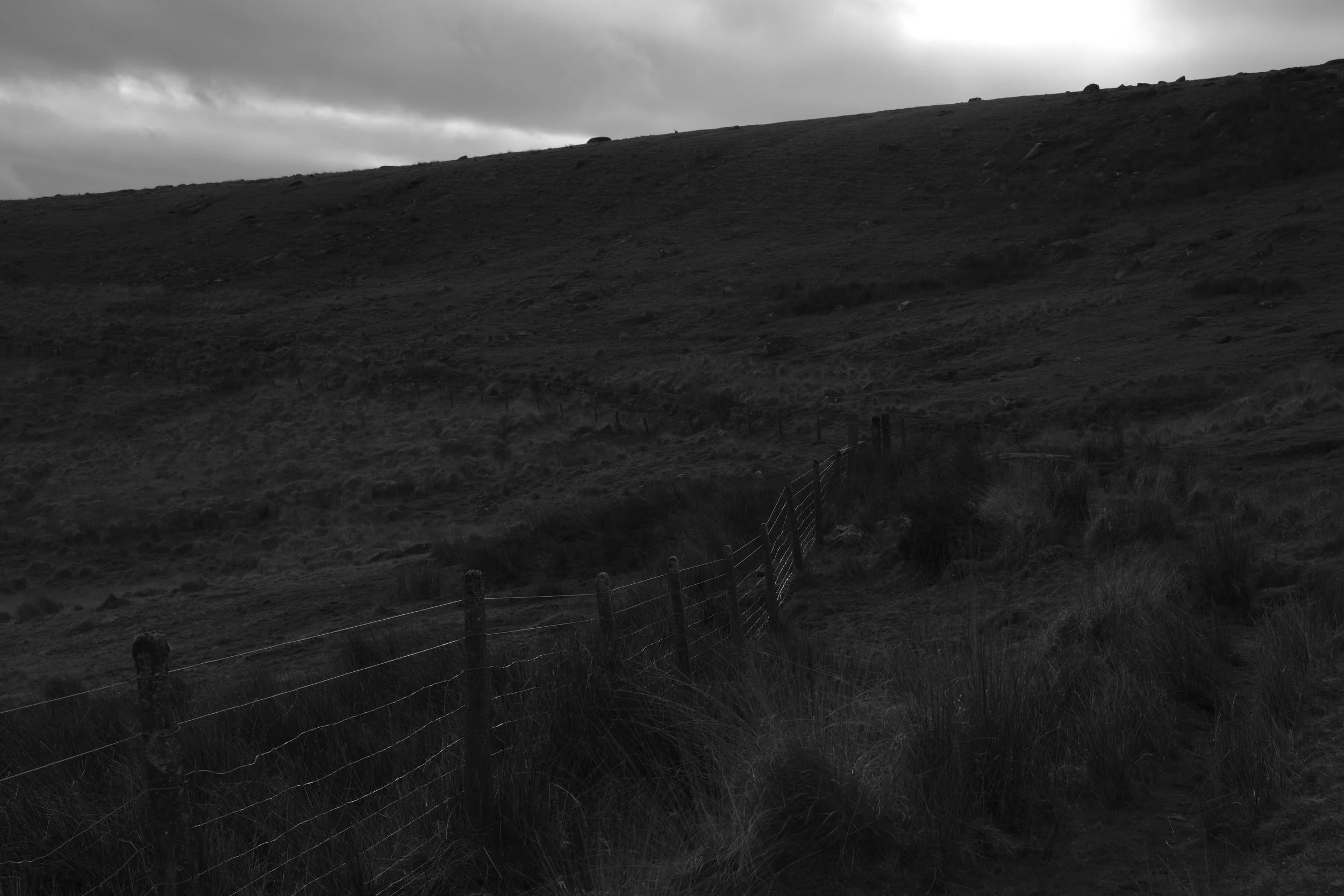
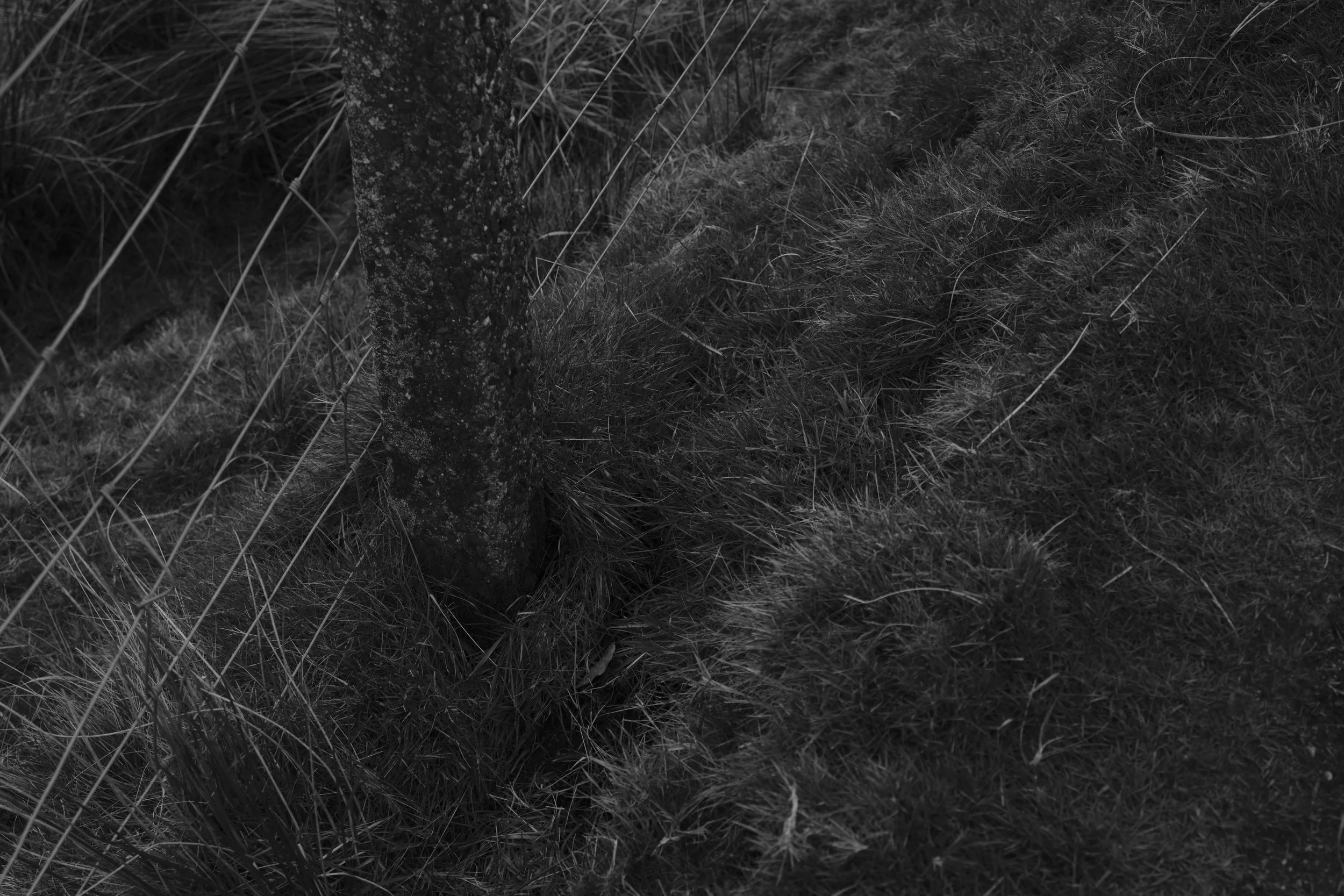
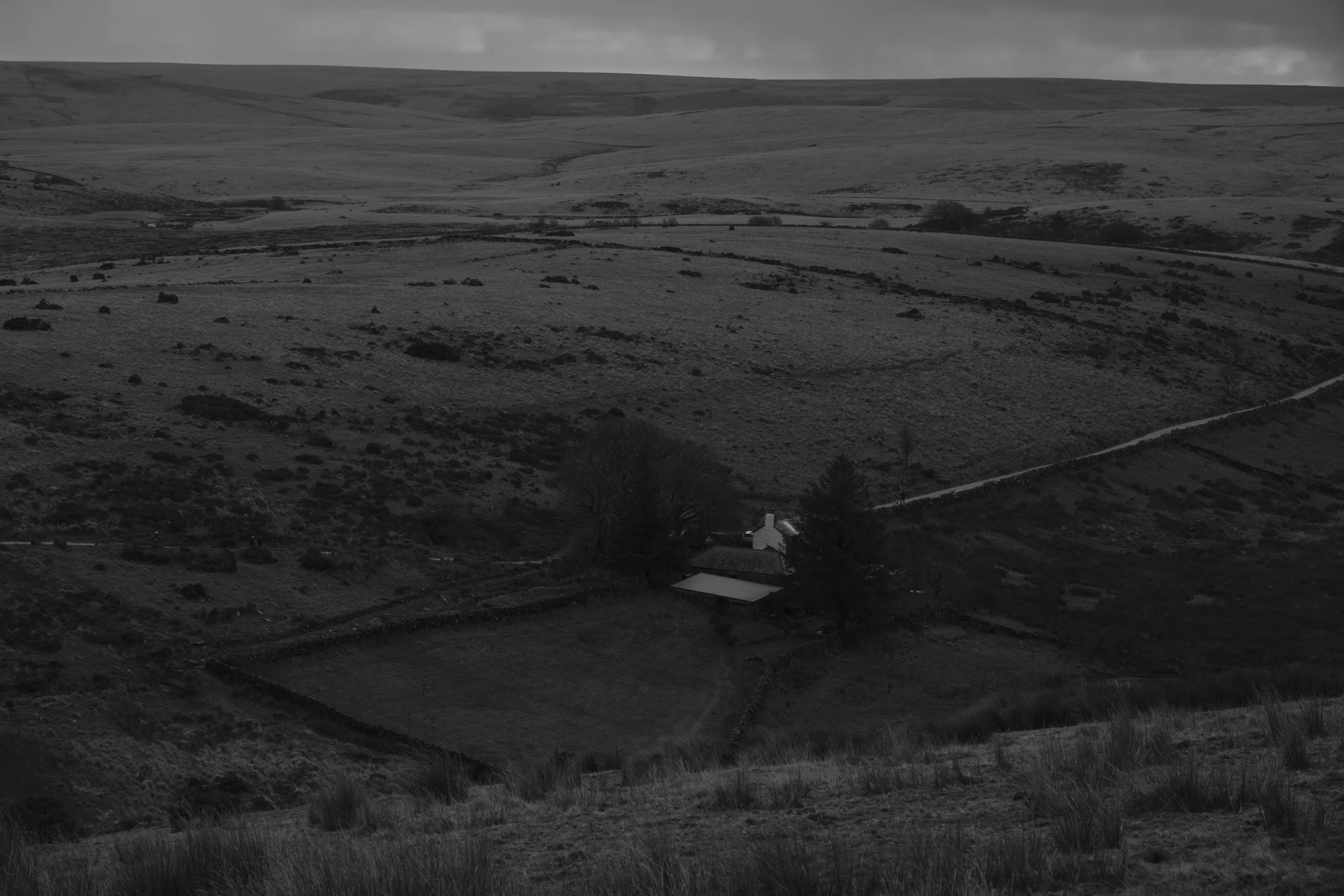
Walking back on the opposite side of the stream to the start point is where I started to properly play with the exposure of the landscape in-camera. I was looking for a similar aesthetic to the work of Martin Amis and I feel this has been accomplished. The landscape I found myself in was similar to the one in Amis’ This Land project where he commentates on the flaws through melancholic photography. The darkness of the images certainly puts the vibe of the images under depressing, mirroring the emotion of the wanderer.
I also kept in mind how I should prioritise unique perspectives to accompany sweeping traditional landscape shots. I did this by pointing my camera directly down at the path I was walking on with the objective of establishing a connection between me as the creator, the wanderer of the dystopia, the physical ground we were both walking on in that moment and the world around us we were navigating through.
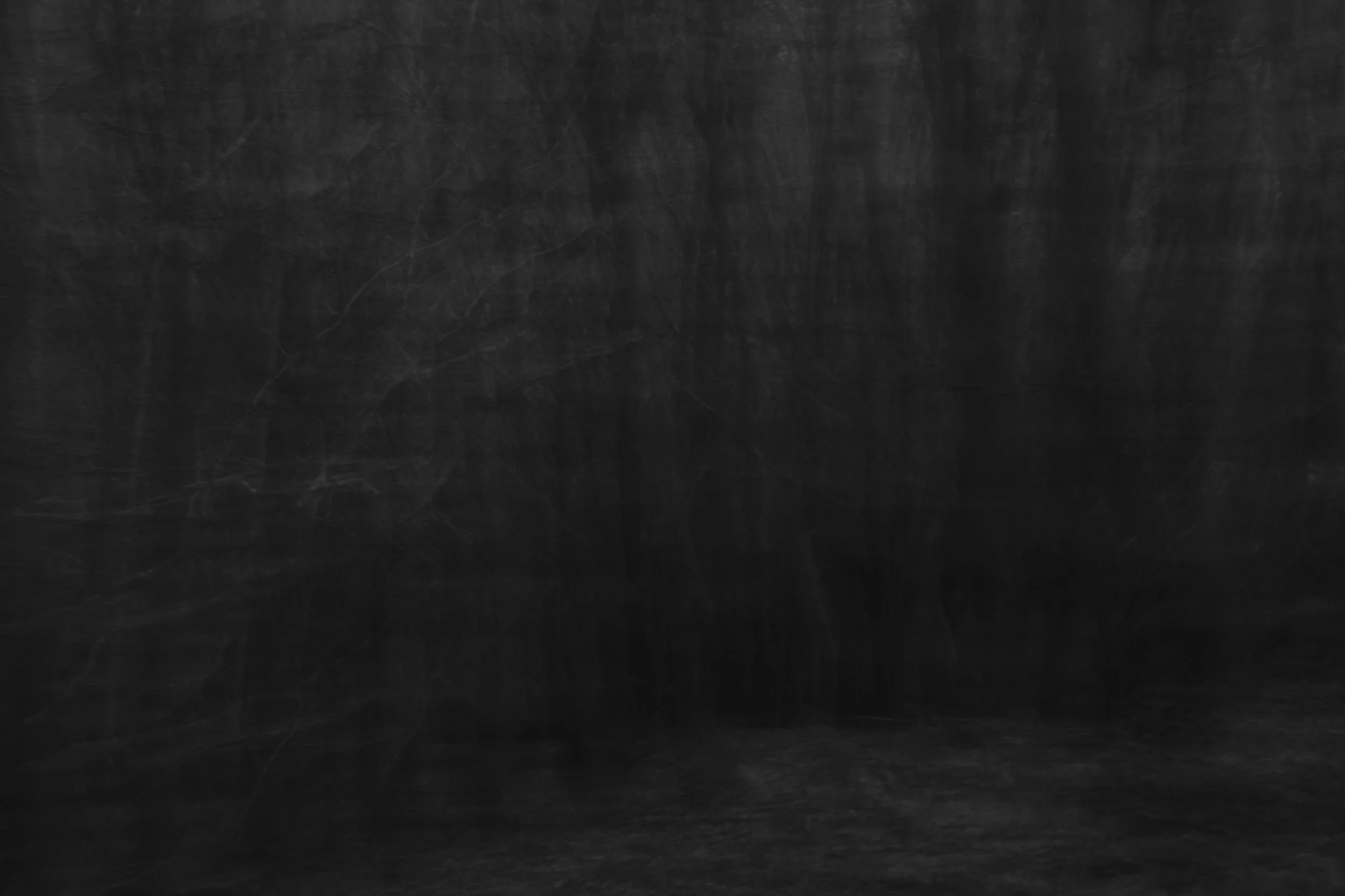
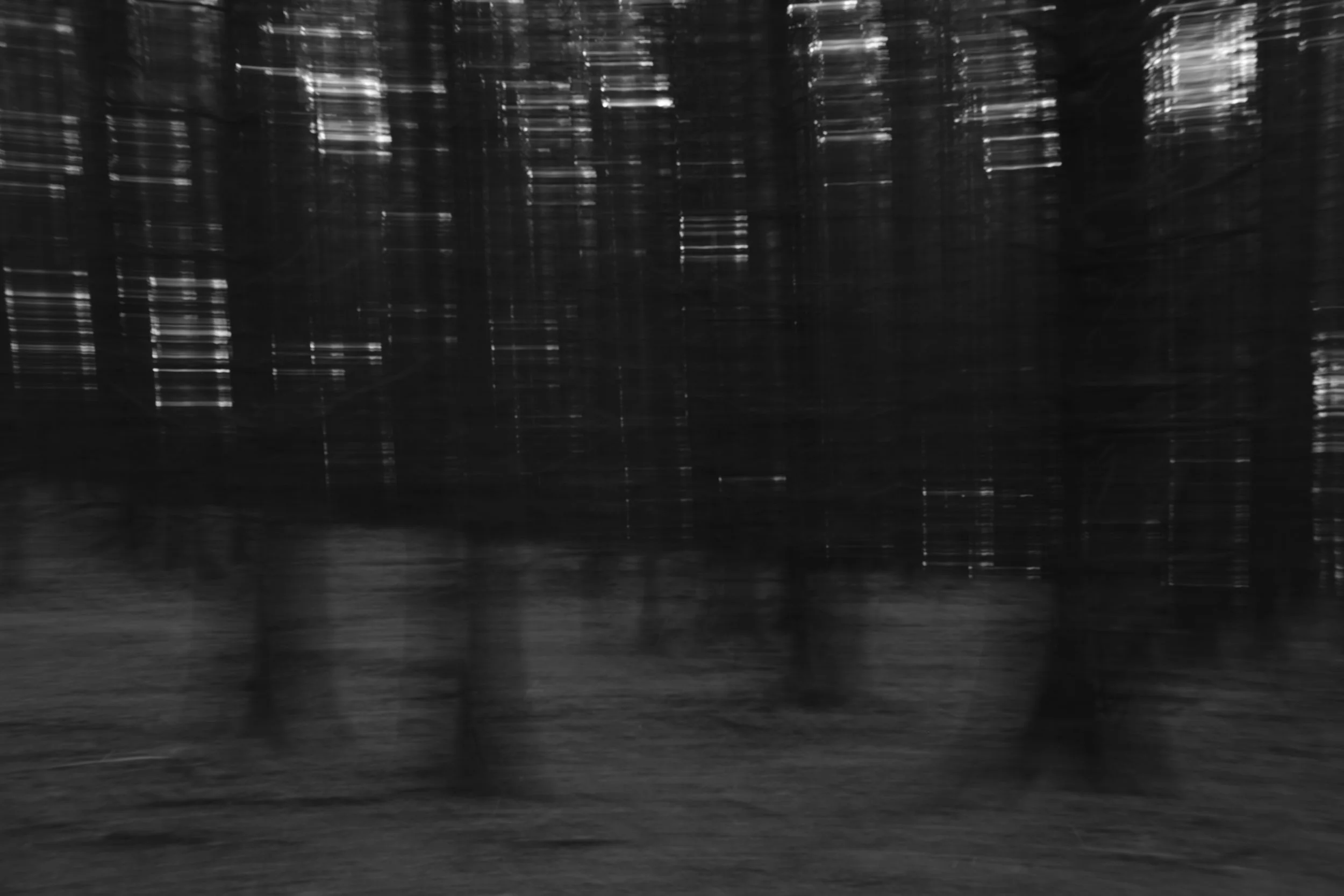
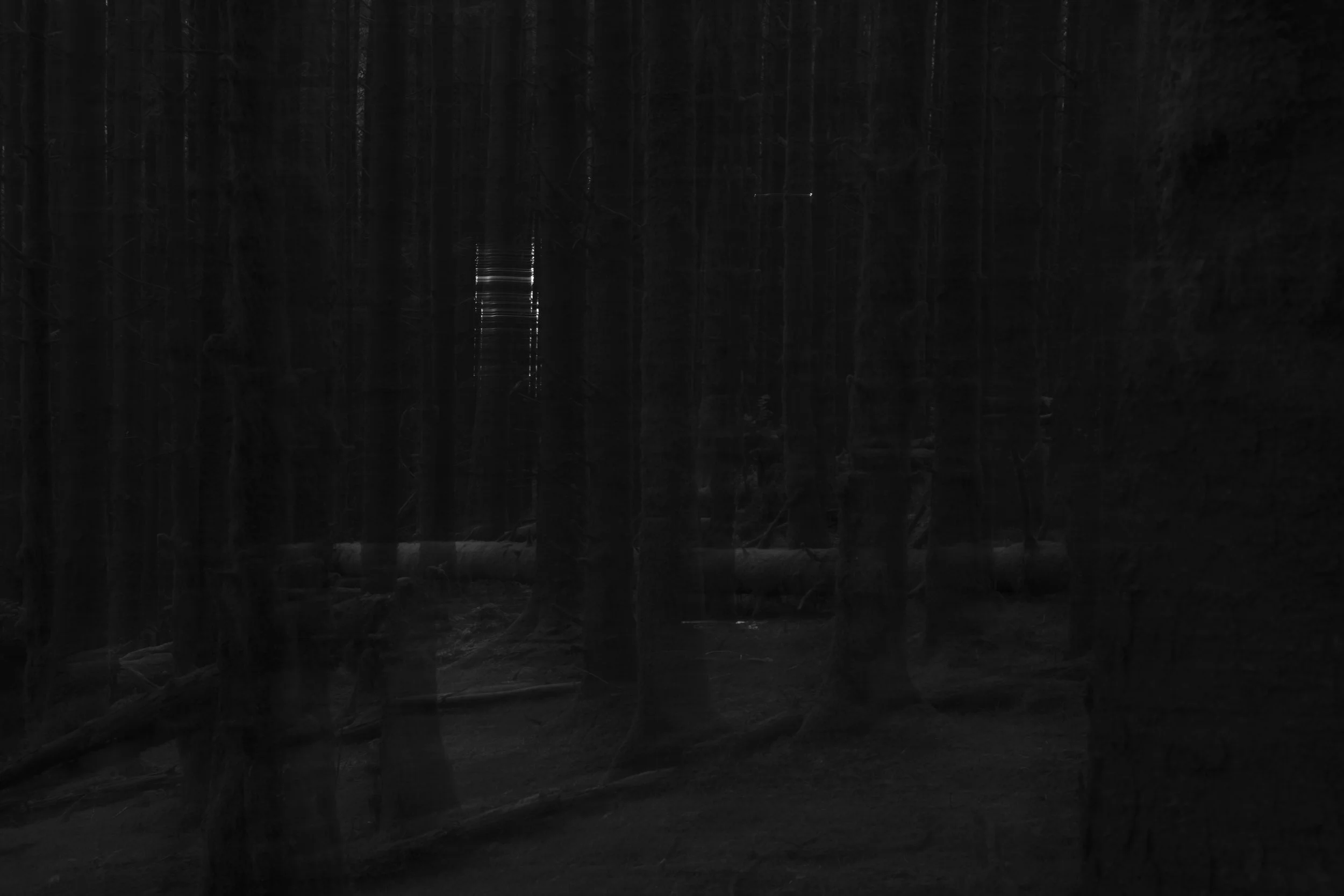
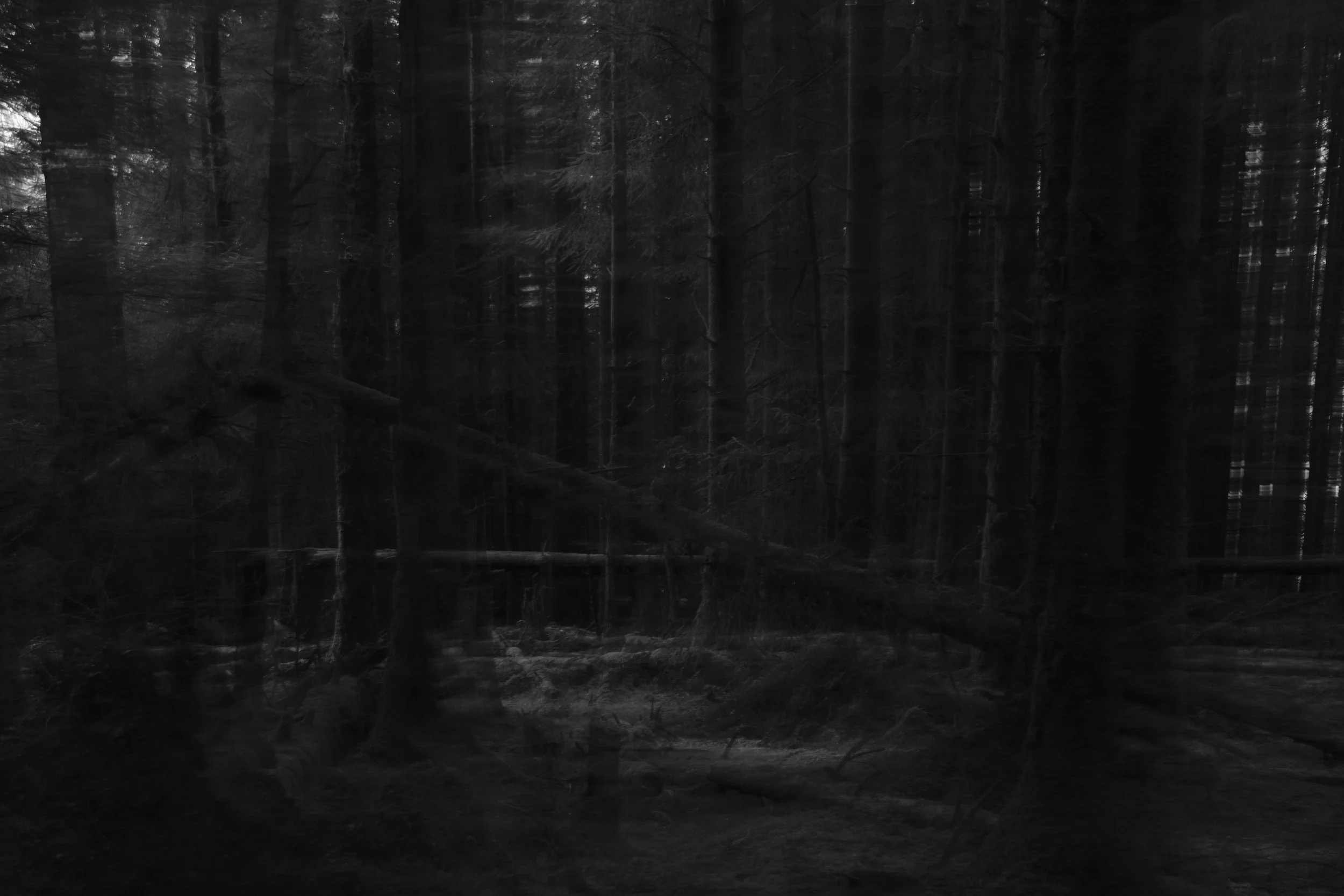
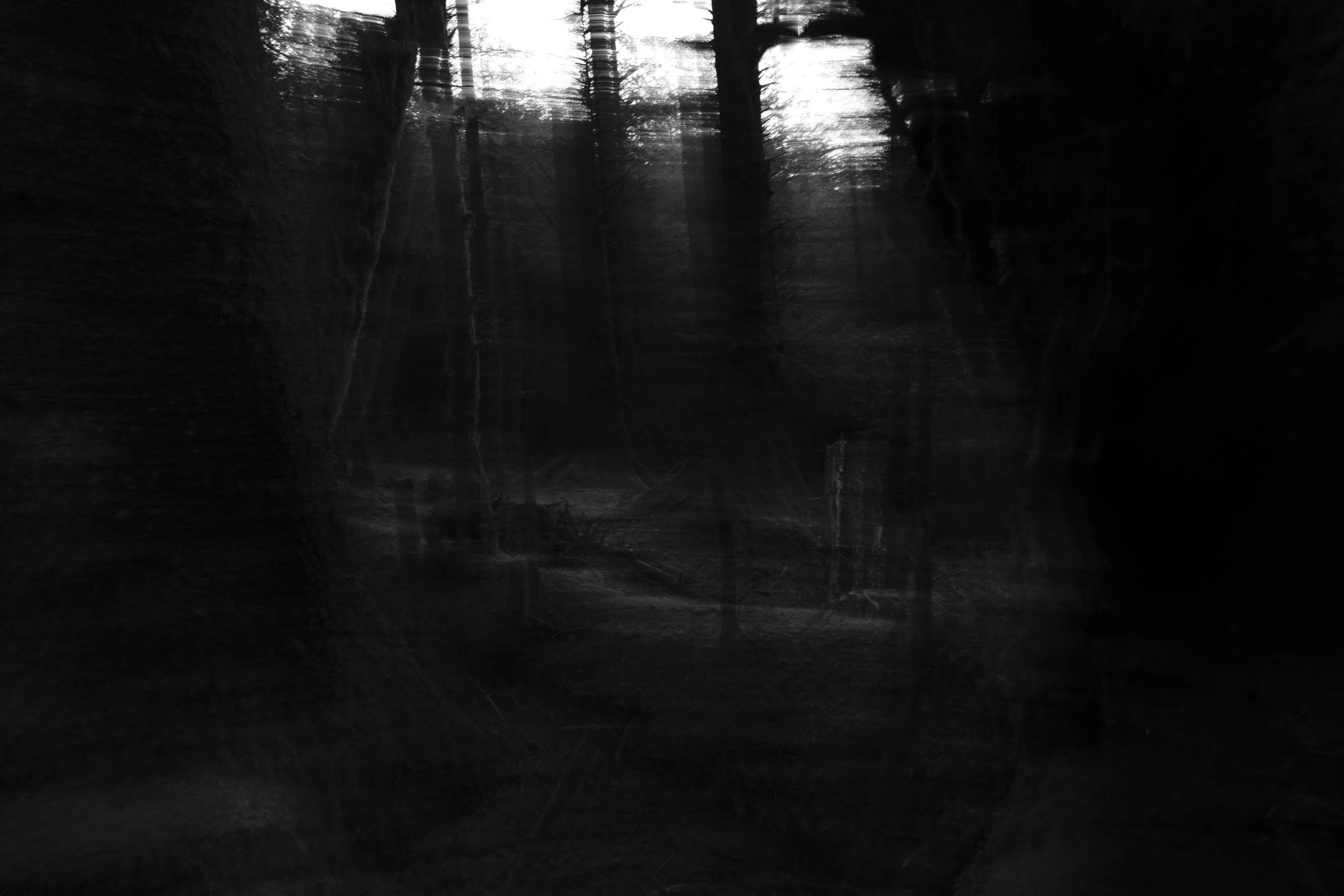
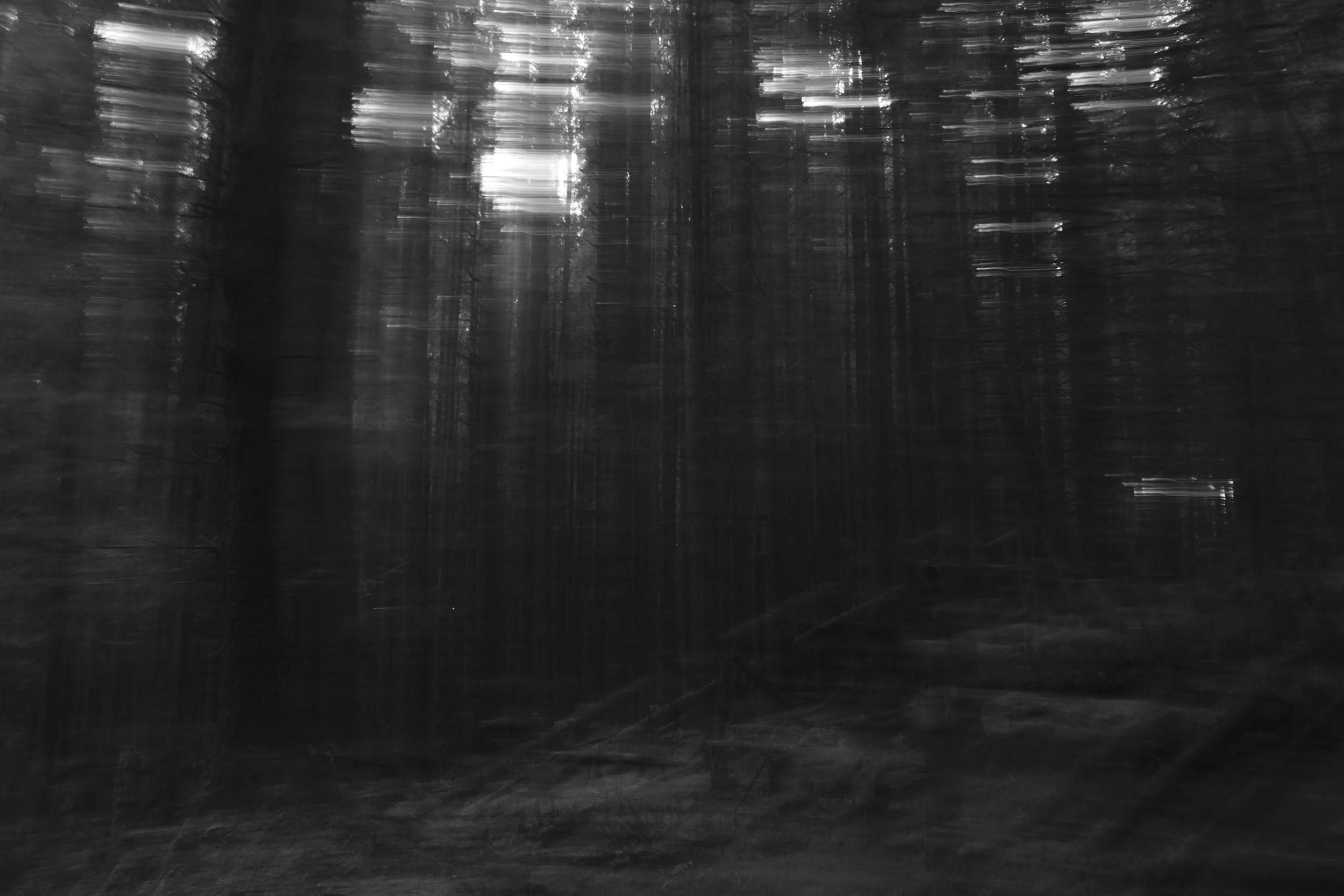
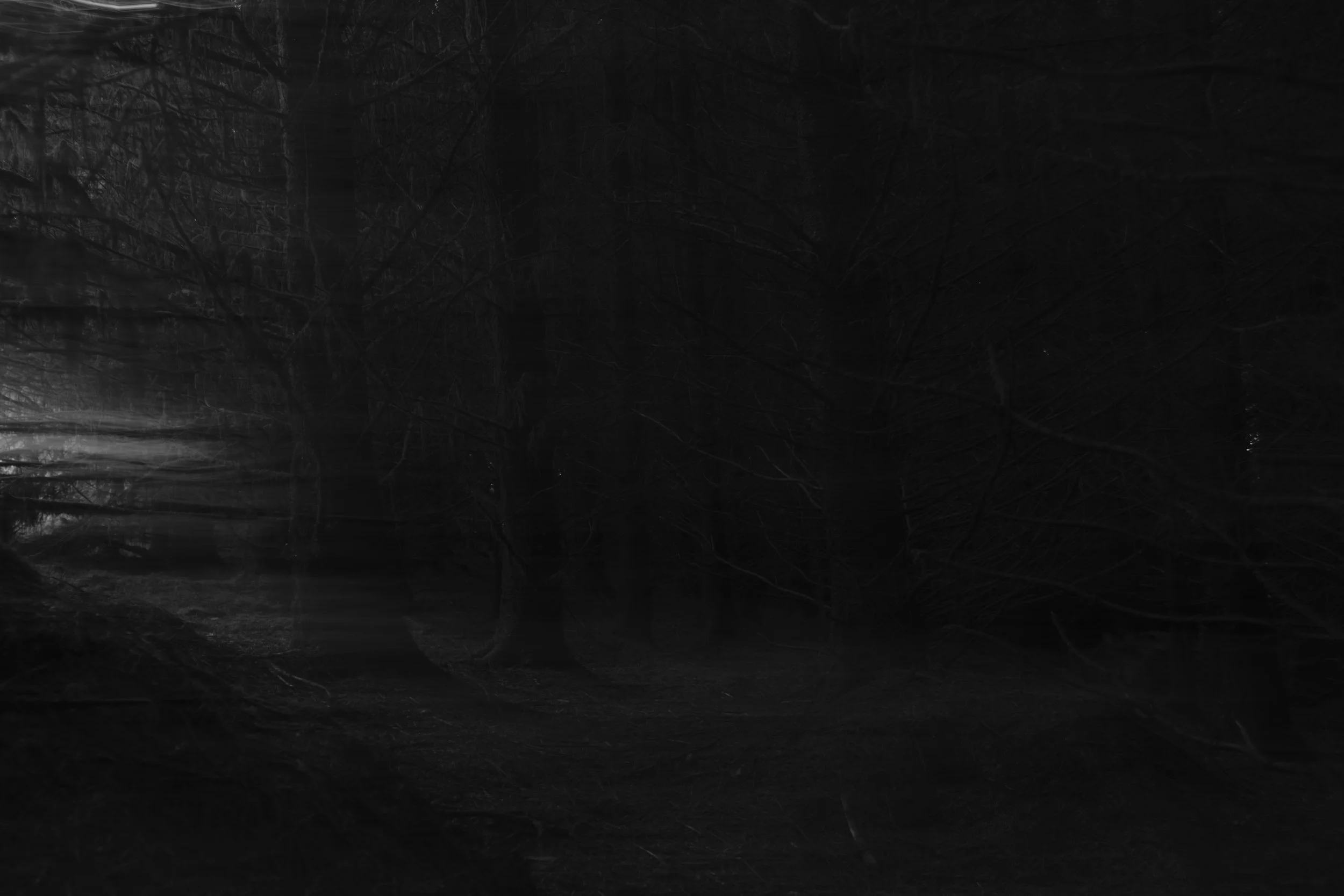
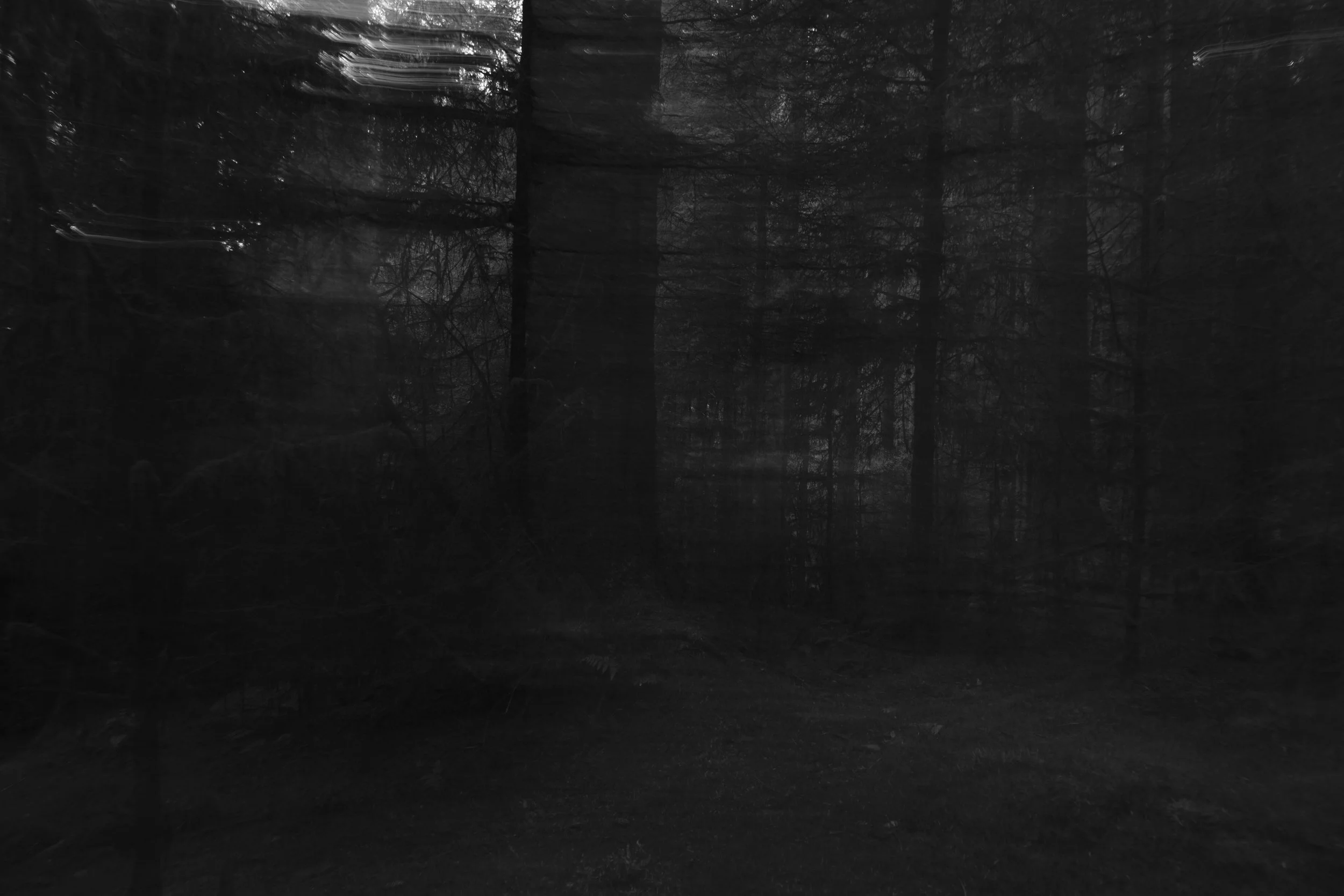
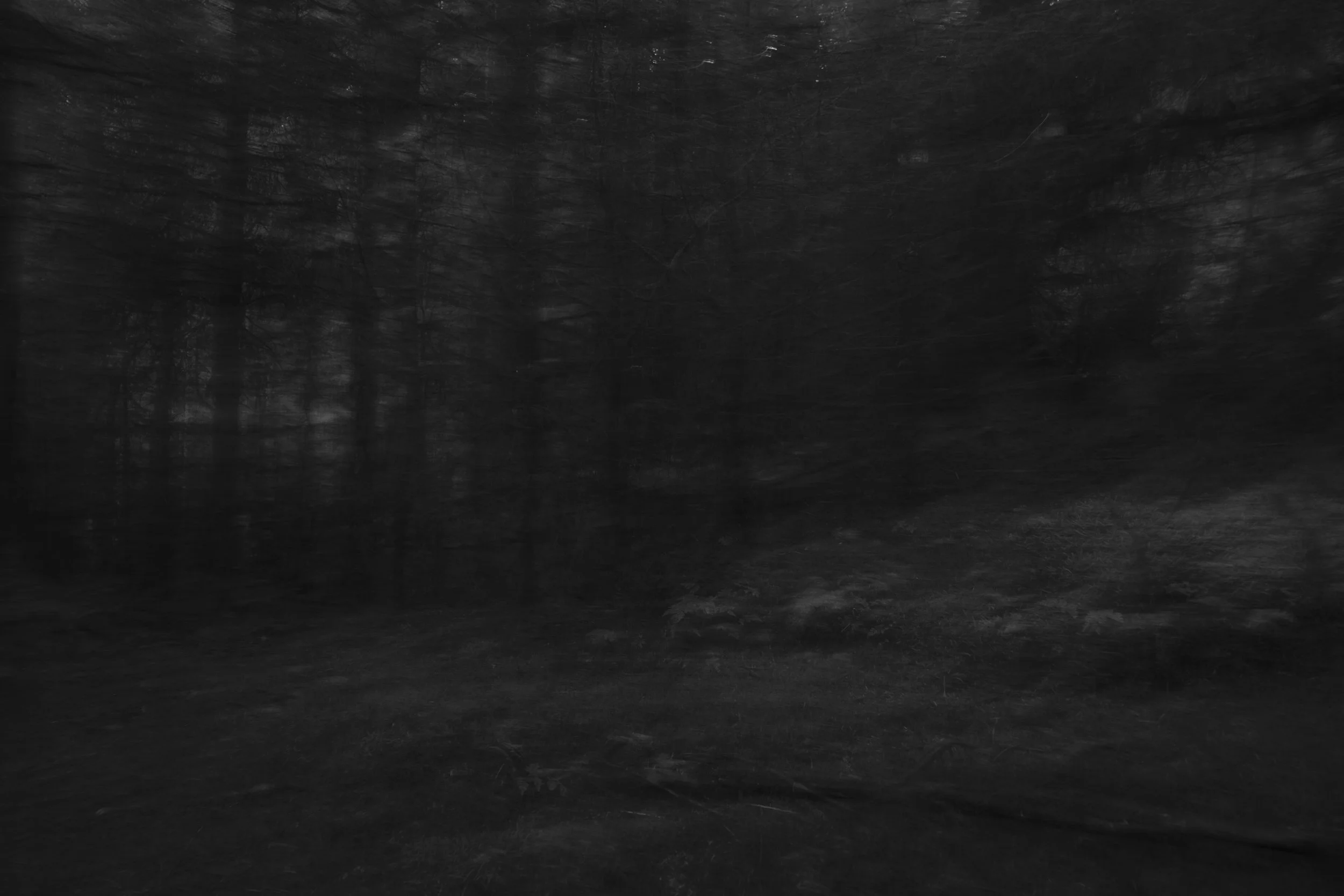
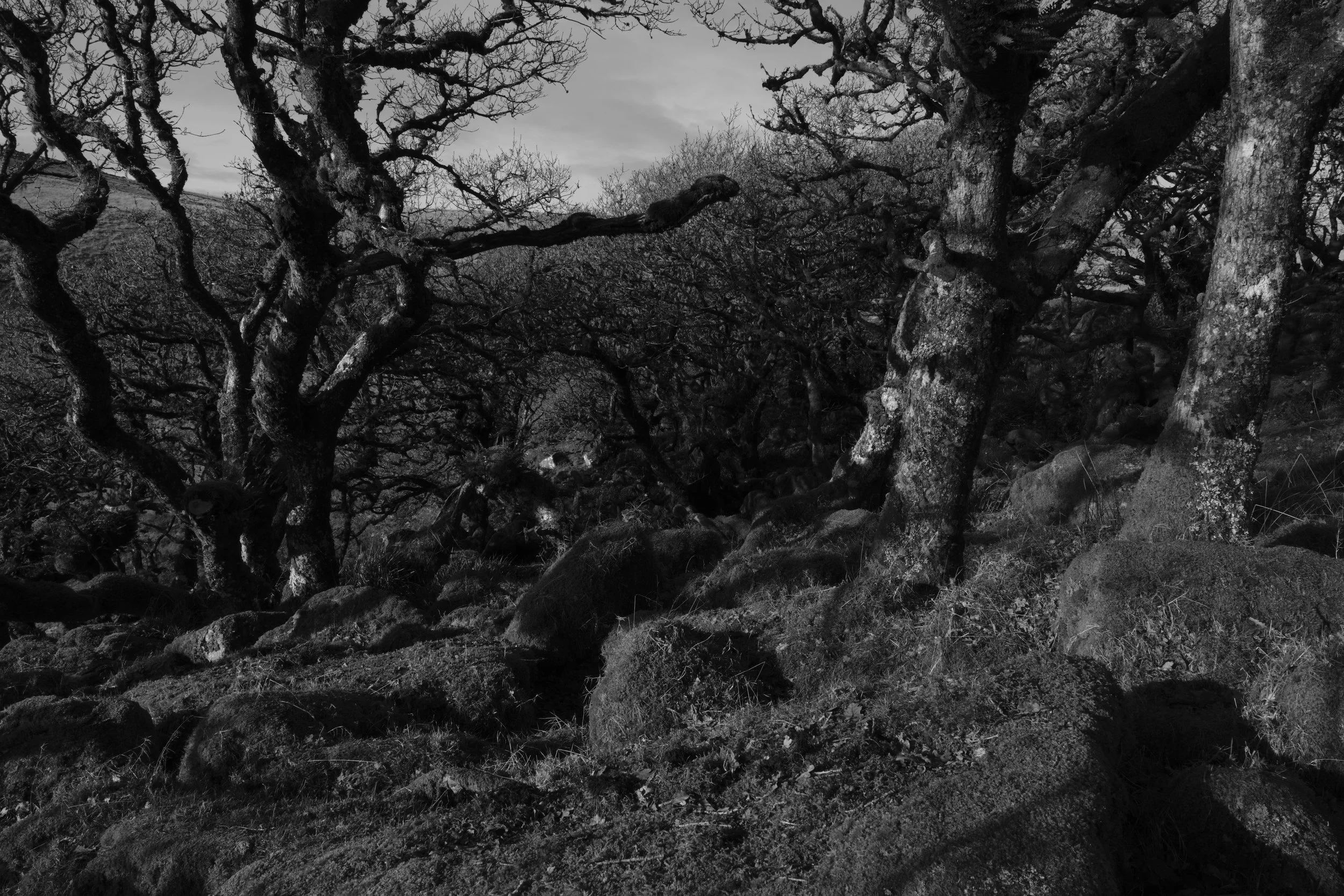
Near the end I had to pass through a woodland which gave me an opportunity to try something I had started to experiment with at the end of Dystopia I. This was where I would move the camera mid-shot creating a blurry effect and this worked better than at Yes Tor because of the subject I was shooting. The trees looked more like physical entities than the rocks of Yes Tor and sweeping landscapes. They were reminiscent of ghosts or souls to me, trapped in the forest and ready to strike at those who were actually trying to save them. This is a common survival mechanism of people going through mental hardship - they are so stuck in their own head and lost that they end up trying to push away the people who are trying to bring them back to the light and they would rather embrace the darkness in their soul than accept help. I found the subtle blur to be more effective than the sharper camera movements because there was enough of the original exposure to portray the implied shift in personality of the subject. It suggests there’s still some of the original left but that’s slowly being replaced by something more sinister.
